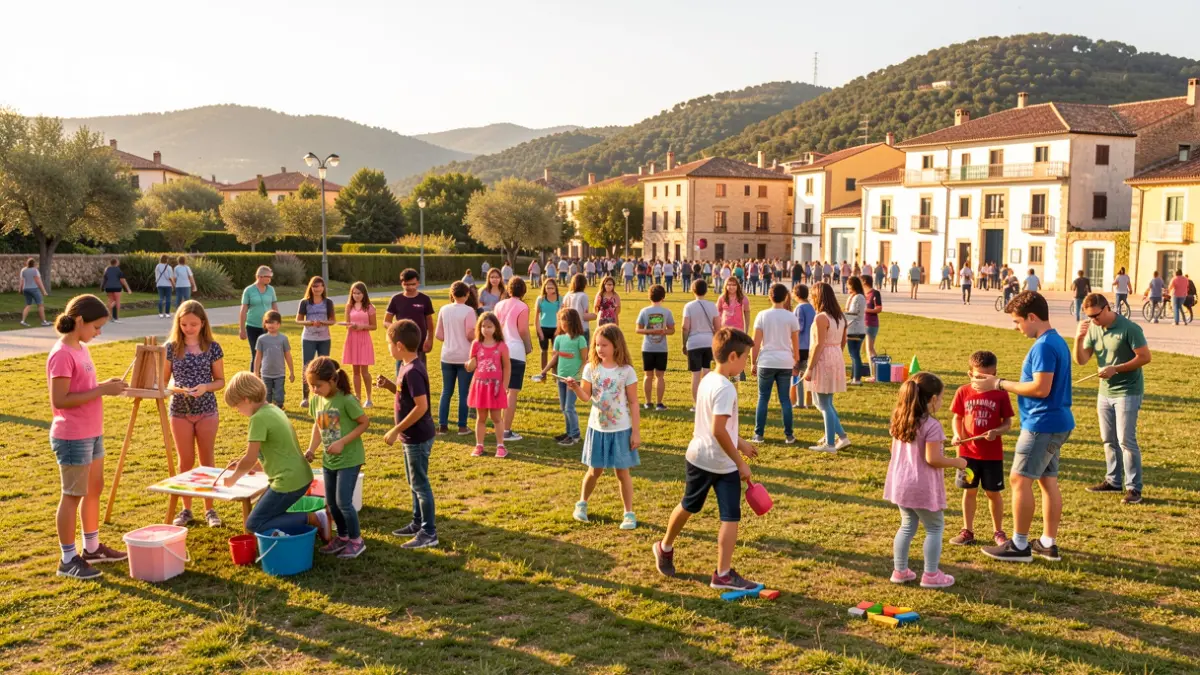
Activities such as guided museum tours, excursions to colony houses, after-school theatre or robotics workshops, summer camps, and school canteen services are common in the lives of millions of children and adolescents in Spain. This field of educational and sociocultural leisure, representing 1% of GDP according to INE data, comprises over 36,000 small and medium-sized enterprises (SMEs) and employs 160,000 workers.
Despite its economic and social impact, companies and workers in the sector report a lack of recognition from the administration and society. Fragmentation is a major obstacle, with activities spread across more than 35 National Classification of Economic Activities (CNAE) codes. Furthermore, the model is characterized by numerous SMEs and self-employed workers, leading to friction, particularly with non-profit foundations.
Territorial implementation also varies. Catalonia and Madrid jointly account for 35.8% of the sector's companies, followed by Andalusia. In relative terms, Castilla y León leads with 1.83 companies per 1,000 inhabitants, above the national average. Aragon, Navarre, and Catalonia also show notable density.
The predominant activities are extracurriculars, academic reinforcement, and urban camps. Other areas include scouting associations, colony houses, and cultural facilities. According to Pere Mulero, president of the FOESC employers' association, "Any project outside the academic sphere with an educational component is part of our sector."
Working conditions differ by activity. Colony houses and camps primarily employ young workers in seasonal and temporary roles. For many, like Sara (25) and Álvaro (26), it serves as an entry point into the workforce, highlighting a more horizontal relationship with children and the exploration of skills and values beyond the formal curriculum.
Volunteering plays a crucial role, especially in scouting associations like ASDE (with 35,000 members) and the Catholic Scout Movement (MSC). In Catalonia, the Esplais Catalans (Esplac) federation unites 100 entities with 7,800 children and over 2,000 monitors. This dedication, though vocational, demands significant effort and time.
School canteens and midday services offer more stable employment during the academic year, but often fragmented, with reduced hours necessitating multiple jobs to achieve a full salary. Precariousness and the need for multiple jobs are constant for many sector professionals.
Sociocultural animation, linked to museums and civic centers, tends to provide more stable and qualified employment, with staff trained in arts, history, or theatre. However, subcontracting and reliance on public tenders create uncertainty, according to the Anrie association.
Despite the challenges, demand for educational services outside school hours is growing annually, driven by difficulties in family work-life balance, the need for socialization opportunities, and the fight against exclusion and inequality.