During the conference "Between Expectation and Reality: The Future of the Electric Vehicle," organized by Diari de Girona and Prensa Ibérica with the sponsorship of Bassols Energia, speakers agreed that the electrification of mobility is an ongoing transition with optimistic data, but hindered by public distrust.
The debate, moderated by the deputy director of Diari de Girona, Oriol Puig, featured Alejandro Valdovinos, Institutional Relations Director at Circutor; Tomàs Megia, Director of the Office for the Transformation of Mobility and Automotive Industries (OPTIMA); and Miquel Bosch, General Director of Bassols Energia. All of them offered a less pessimistic view than what often dominates public discourse.
“"The pace of electrification we are experiencing is good, above what we had planned. But the perception is negative."
Megia emphasized the gap between perception and reality, indicating that the market is rapidly approaching the goals set by the European Union. He argued that the electric vehicle is a "totally competitive technology" and that the current moment represents a "turning point" for the sector. He noted that these vehicles already account for nearly 24% of registrations, ten points more than the previous year, demonstrating a good pace of progress.
Nevertheless, Megia admitted that the electric vehicle is not yet for everyone, fitting better with middle to high-income profiles and users with garages. He insisted that the analysis should not be limited to the purchase price, but to the "total cost of ownership."
Valdovinos reinforced this idea, describing the situation as an "ongoing transition" and highlighting that the decision is often financial. He explained that a driver covering between 20,000 and 30,000 kilometers annually can save significantly compared to a combustion vehicle, offsetting the price difference within one or two years. He also warned that, in the context of the energy crisis, it is unlikely that fuel prices will return to previous levels.
“"With the energy crisis, it is difficult to think that fuel prices will return to previous levels."
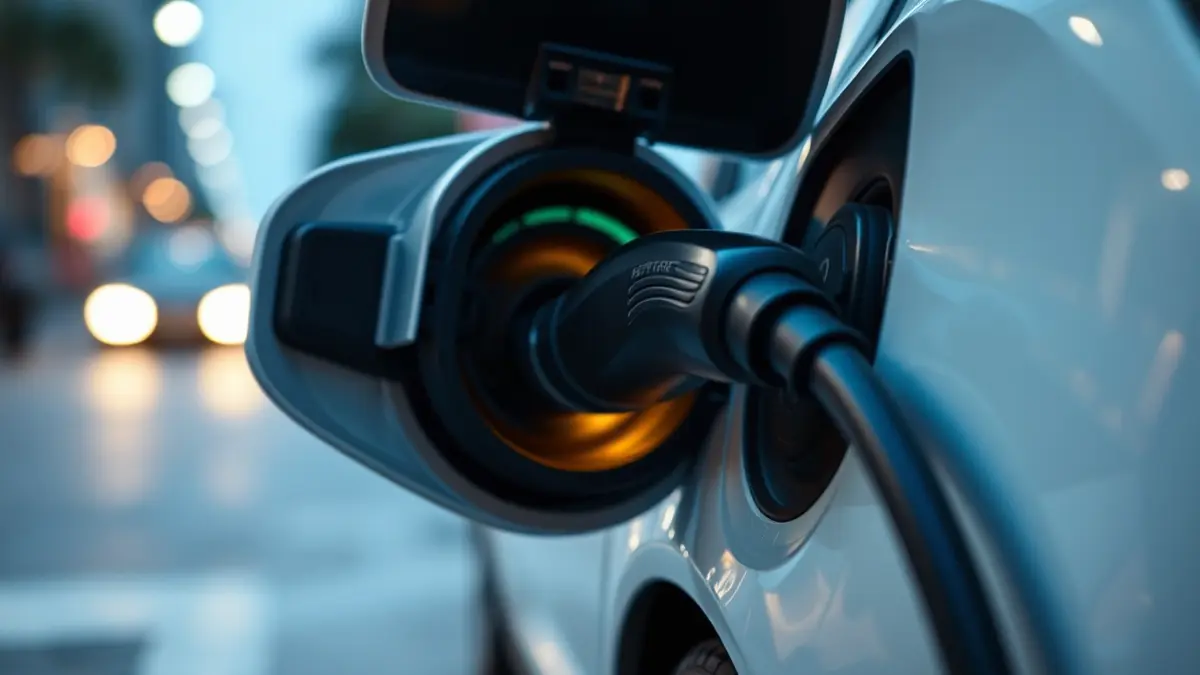
Regarding charging infrastructure, Valdovinos argued that the lack of points is not the main problem, but rather consumer "awareness." He suggested that many users focus on exceptional situations instead of the vehicle's daily use.
Bosch agreed with this diagnosis, emphasizing trust and education. He stated that, despite being a "consolidated fact," the electric vehicle "has not gained the speed or volume it should have." He argued that public aid is no longer essential for its competitiveness and that education is crucial not only for the environment and individual economy but also for Europe's "energy independence."
In the industrial sphere, Megia highlighted Catalonia's weight in the automotive sector, being a "world leader in vehicle and component manufacturing." He warned that the transformation affects the entire auxiliary chain, with about 250 of the 350 Catalan component companies needing to adapt their catalog, which is still heavily linked to combustion vehicles.
“"The perception of the electric vehicle today is more negative than the reality shown by the data."
The speakers acknowledged practical obstacles in charging, especially for those without private parking spaces. Valdovinos reminded that legally, a homeowners' association cannot oppose the installation of a private charger, although the routing of conduits can be discussed.
Finally, regarding hydrogen, there was a consensus that it is not a competitive option for passenger cars in the short term, although it could be relevant in sectors such as aviation or naval transport. Bosch summarized the situation by stating that "Hydrogen is where electric mobility was in the 2000s."