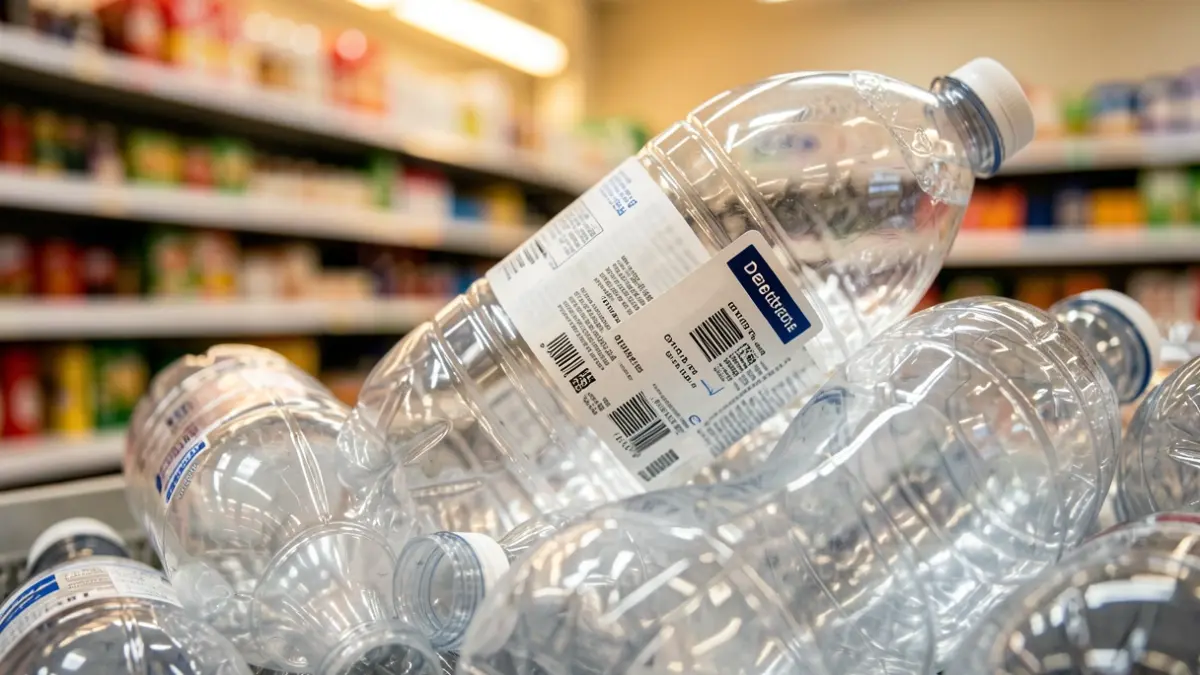
The food sector considers it "impossible" to have the new deposit, return, and refund system (SDDR) ready for next year, which obliges retailers to accept single-use beverage containers. Manufacturers and distributors point to January 2029, the final deadline set by the European Union, as a realistic date for its implementation in Spain.
According to industry estimates, this would involve managing approximately 17 billion units annually, which could be returned at over half a million retail establishments. The estimated investment for machinery, storage space, and system setup ranges between 400 and 600 million euros. Added to this economic cost is the logistical complexity, due to municipal fragmentation and a beverage consumption model different from other European countries, with a significant role for bars and restaurants.
The absence of a specific Spanish regulation necessitates reliance on European law, which grants a three-year margin. The SDDR, similar to the old system for glass bottles, aims to improve the recycling and reuse of containers. Although around twenty European countries already apply it, the Spanish model will be one of the largest and must consider the high influx of tourists and the diversity of municipalities.
One proposal to facilitate implementation is for smaller municipalities to group together to manage joint collection points, particularly in the so-called "empty Spain" regions. The need to offer both automatic and manual return systems to ensure accessibility for all types of users is also anticipated. Ecoembes, the current manager of street recycling bins, is also working under the assumption of a postponement.
The system involves charging an additional deposit at the time of beverage purchase, with the amount yet to be decided (ranging from 7 to 40 cents, depending on the container), which is refunded when the customer returns the empty container at an authorized collection point.
Both environmentalists and the Ministry for Ecological Transition emphasize the urgency of resolving this issue, recalling that Spain has already received warnings from Brussels due to the limited success of the current collection system. In 2023, only 41.3% of plastic beverage bottles were collected separately, far from the 70% target set by Spanish law, and well below the 90% required by 2029 under the new European framework.