Parkinson's disease is now the second most common neurodegenerative pathology worldwide, surpassed only by Alzheimer's. Its prevalence, disability, and mortality are constantly increasing. In Spain, over 200,000 people suffer from this condition, and nearly 10,000 new cases are diagnosed each year.
According to data from the Spanish Society of Neurology (SEN), the increase is significant, as the number of Parkinson's patients has doubled since 2012. Epidemiological projections indicate that by 2050, Spain could have the highest prevalence per inhabitant, with approximately 850 cases per 100,000 people.
In the Girona regions, this trend is also evident. During 2025, the neurology departments of Josep Trueta and Santa Caterina hospitals treated 1,500 Parkinson's patients. The incidence of the disease ranges from 8 to 19 cases per 100,000 people annually but increases significantly with age, reaching 400 cases per 100,000 inhabitants by age 85. Hospital sources confirm that Parkinson's is clearly on the rise, with an increasing impact both in Girona and globally.
This sustained increase is mainly attributed to population aging, although specialists emphasize that genetic and environmental factors also influence the disease's development. The average age of onset is around 60, with a slight male predominance. However, 15% of patients experience early onset, before age 45, often linked to genetic or family factors, although less than 10% of cases are clearly hereditary.
Parkinson's is characterized by the progressive degeneration of dopaminergic neurons, essential for movement control. Motor symptoms include resting tremor, rigidity, slowness of movement, and postural instability. Additionally, there are non-motor symptoms such as sleep disorders, depression, or cognitive impairment, which can appear years before motor signs. The complexity of diagnosis, which is primarily clinical, means many cases are not detected in the initial stages, with an average delay of one to three years between the onset of the first symptoms and definitive diagnosis.
Current treatments are mostly symptomatic, including drugs to modulate dopaminergic function and techniques such as deep brain stimulation or high-intensity focused ultrasound for resistant cases. Physiotherapy and occupational therapy are also crucial for improving patients' quality of life. Research is now focusing on therapies that can modify the disease's course, such as gene therapy or immunotherapy. The projected increase in cases demands strengthened research, better planning of healthcare resources, and promotion of prevention strategies based on healthy lifestyle habits.
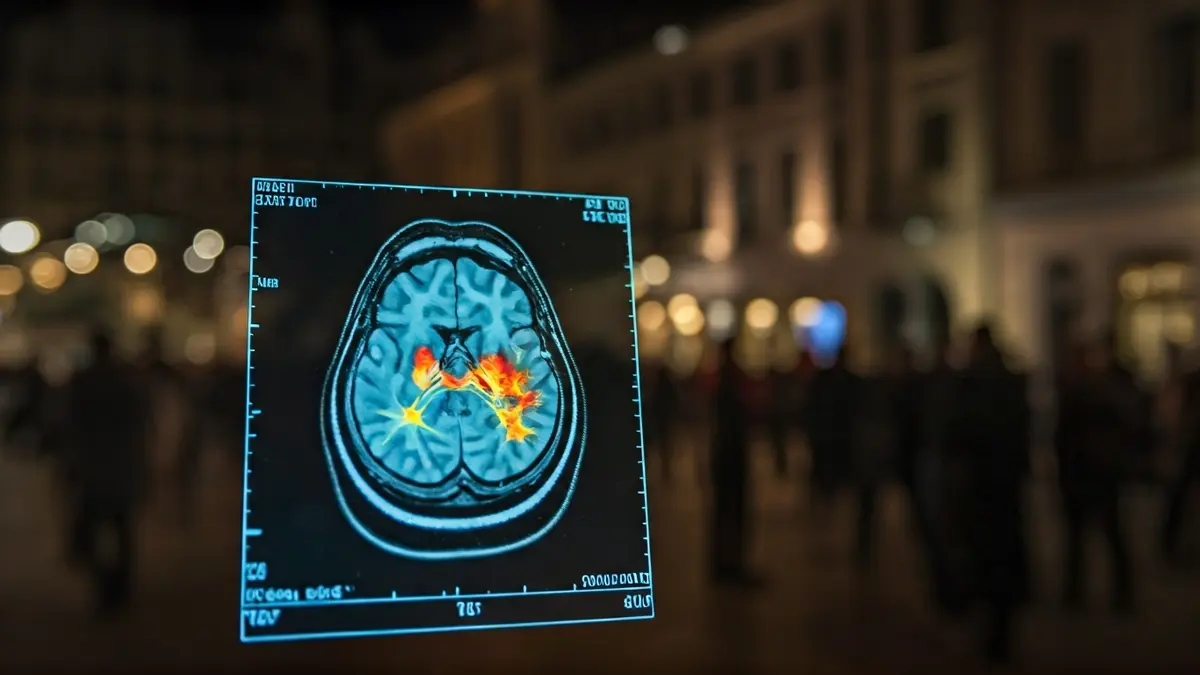
A recent study by Parc Sanitari Sant Joan de Déu has revealed a direct connection between Parkinson's movement difficulties and structural brain alterations, specifically a loss of cortical folding. This reduction affects key regions in sensory information processing and could be linked to the slowing of motor fluidity. These findings suggest that slowness and difficulty moving might be associated with a deficit in brain processing, helping to understand patients' frustration with daily tasks.
The study, part of the doctoral thesis of Dr. Antoni Callén, head of the Neurology Service at Hospital SJD Sant Boi, in collaboration with Gemma Colomé and under the direction of Christian Núñez and Christian Stephan-Otto, indicates that magnetic resonances could be a key tool for detecting cortical changes related to bradykinesia (slowness of movement). This would allow for faster diagnoses, more precise medical follow-up, and a more accurate assessment of the impact of new therapies, opening new avenues for the clinical approach to Parkinson's.
Parkinson's disease affects over eight million people worldwide. In Catalonia, more than 30,000 are diagnosed, and it is estimated that in the Girona regions, it affects about 3,000 residents, with increasing prevalence.