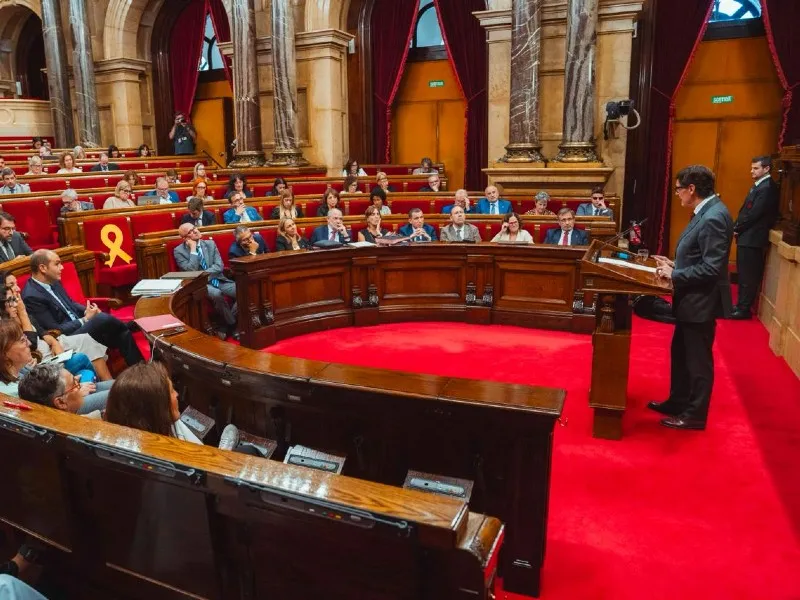
In mid-January, Minister Sílvia Paneque unveiled the draft of the new High Mountain Law, which is currently undergoing processing. This initiative by the Government aims to replace the existing legislation from 1983, with the goal of adapting to 'future challenges,' as explained by Paneque from the headquarters of the Conselh Generau d’Aran.
The current proposal narrows the scope of the previous law, concentrating public resources on territories genuinely considered high mountain areas. This means that, out of the 144 municipalities initially included in regions such as Val d'Aran, Alta Ribagorça, Pallars Sobirà, Pallars Jussà, Alt Urgell, Cerdanya, Solsonès, Berguedà, and Ripollès, over a hundred are now excluded from the high mountain category.
In the case of Lluçanès, all its municipalities, with the exception of Santa Maria de Merlès, lose their high mountain status. However, they will retain the designation of 'mountain zone municipalities,' which, according to the Government, will allow them to maintain preferential treatment in Generalitat subsidies, although specific mechanisms have not been detailed.
“"It will be the Generalitat's gateway to the High Mountain."
One of the notable novelties of the draft bill is the creation of the High Mountain Technical Office, which Minister Paneque described as 'the Generalitat's gateway to the High Mountain.' This office will be responsible for developing the strategic action plan, identifying territorial challenges, and evaluating the implementation of public policies. Furthermore, the General High Mountain Council will transition from a consultative body to a space for participation and decision-making, with the function of provisionally approving the Strategic Action Plan.
Several municipalities, regional councils, and entities, such as the Rural Development Agency of Central Catalonia (ADR), have submitted allegations to the draft bill. Anna Garrós, manager of ADR Central Catalonia, explained that the allegations focus on technical aspects, such as the need for clearer definitions of the composition of the High Mountain Office and the General Council, as well as the creation of a specific fund for financing these territories.