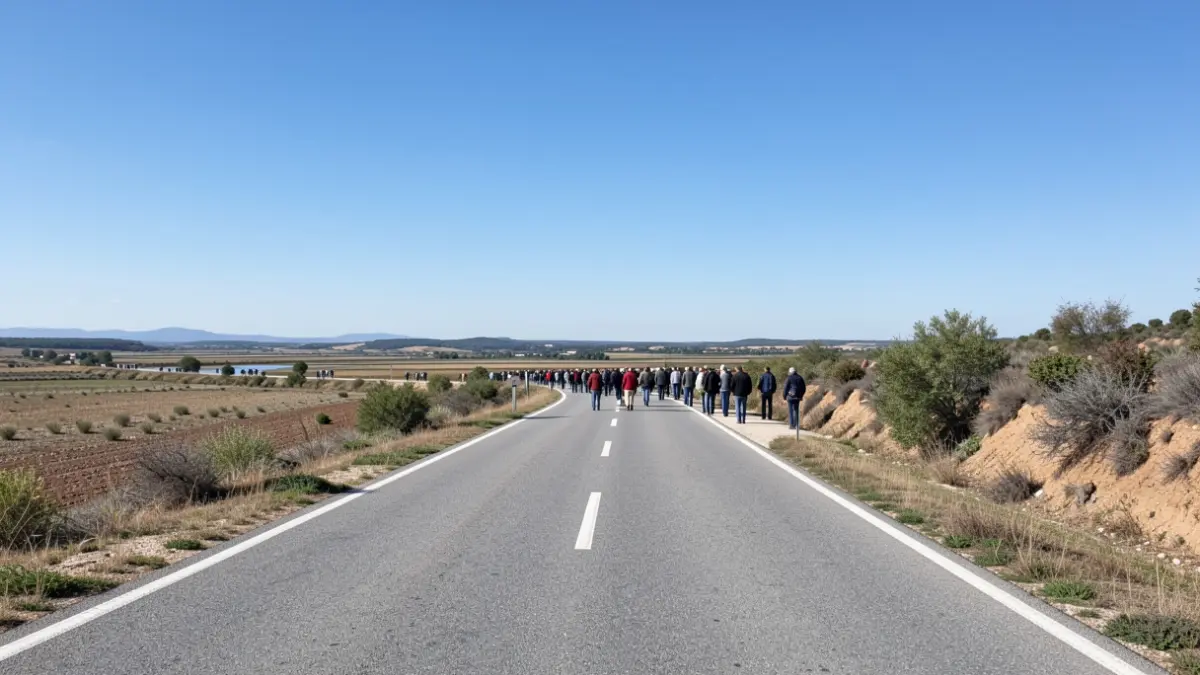
The Ebre Delta will become the main attraction point for the total solar eclipse next Wednesday. Thousands of visitors are expected to arrive at the natural park's municipalities to witness this astronomical phenomenon. Mobility on secondary roads will be a challenge, which is why the Servei Català de Trànsit (SCT) has developed a special plan.
The plan includes closing two roads to traffic once the eclipse concludes, with the establishment of alternative routes. In the northern Ebre Delta, circulation will be concentrated on the TP-3401 (from L'Ampolla to Deltebre) and the T-340 (towards Deltebre and the beaches of Riumar and la Marquesa). The return towards the AP-7 will not be possible via the TP-3401, considered dangerous at night, and the T-340 must be used instead.
In the southern Ebre Delta area, traffic flow will be more circular. An agreement has been reached between Amposta and La Ràpita for access to the Trabucador spit from both towns, but the return journey will not be towards La Ràpita; instead, the road of Eucaliptus must be taken. This is due to ongoing works on the Carretera de la Vergonya, which connects La Ràpita with the Trabucador.
The town of Amposta is anticipated to be a conflict point, both for arrivals and departures, serving as a traffic hub between the two delta areas. The director of the SCT, Ramon Lamiel, has highlighted the need to "protect the urban center from vehicle entry", prioritizing access to the N-340 or the AP-7 by placing cones to prevent entry into the town via the old bridge or the C-12.
Lamiel acknowledged the good work done with the local councils, assisting them in planning parking and rapid exits. The SCT recommends prioritizing physical signage over human informers to avoid stops that could cause traffic jams. The idea of reserving access via QR codes, as proposed by l'Ametlla de Mar, has been discarded to prevent delays that could affect the motorway.