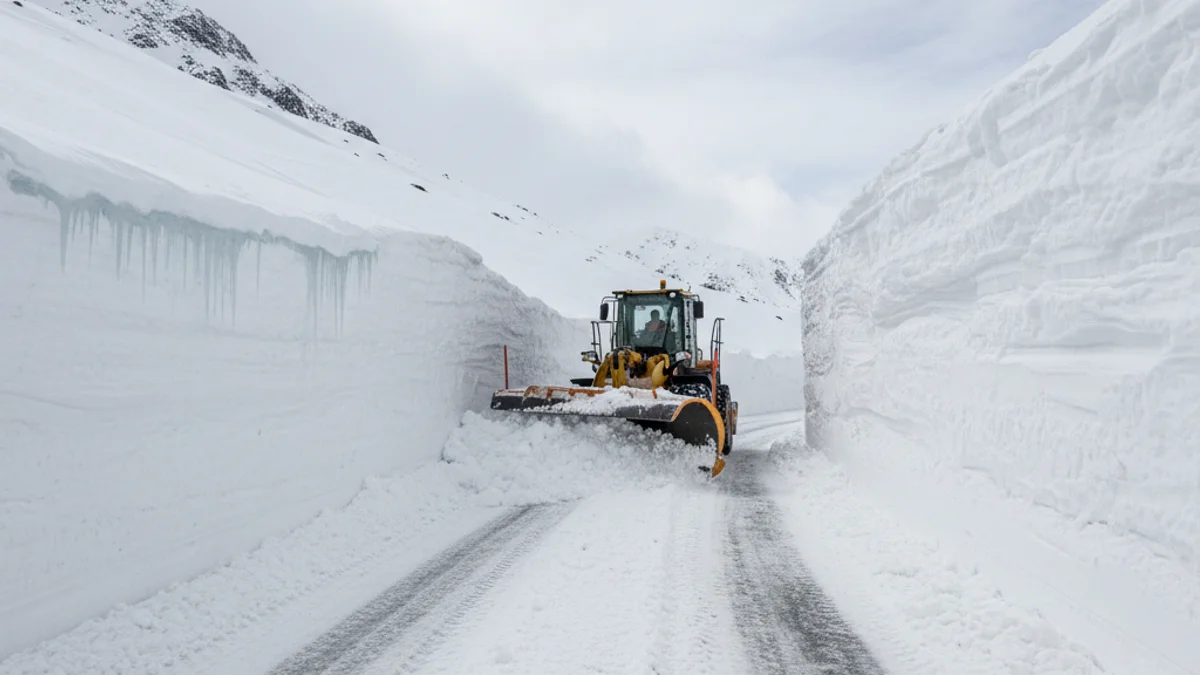
The detonations were performed using hydrogen gas at specific unstable points in the snowpack, where the risk of new slides was extreme. According to the Centre Lauegi, the avalanche danger level had increased to "very strong" (4-5) due to heavy snow accumulation, with over two meters recorded at the highest elevations.
The storm caused Lleida to experience its second wettest January in the last 114 years, surpassing 100 liters per square meter of rainfall.
On Sunday afternoon, a powerful storm crossed the regions of Noguera, Urgell, and Segarra from west to east, bringing sleet and hail to towns such as Balaguer, Cervera, and Castelló de Farfanya. Temperatures dropped sharply to 3 degrees Celsius in most areas.
Protecció Civil kept the Neucat and Vencat emergency plans activated in anticipation of further precipitation and wind gusts exceeding 72 km/h. Firefighters responded to about thirty calls, mainly concerning fallen trees and landslides, including one reported on the ISR-12 road in Les Oluges.