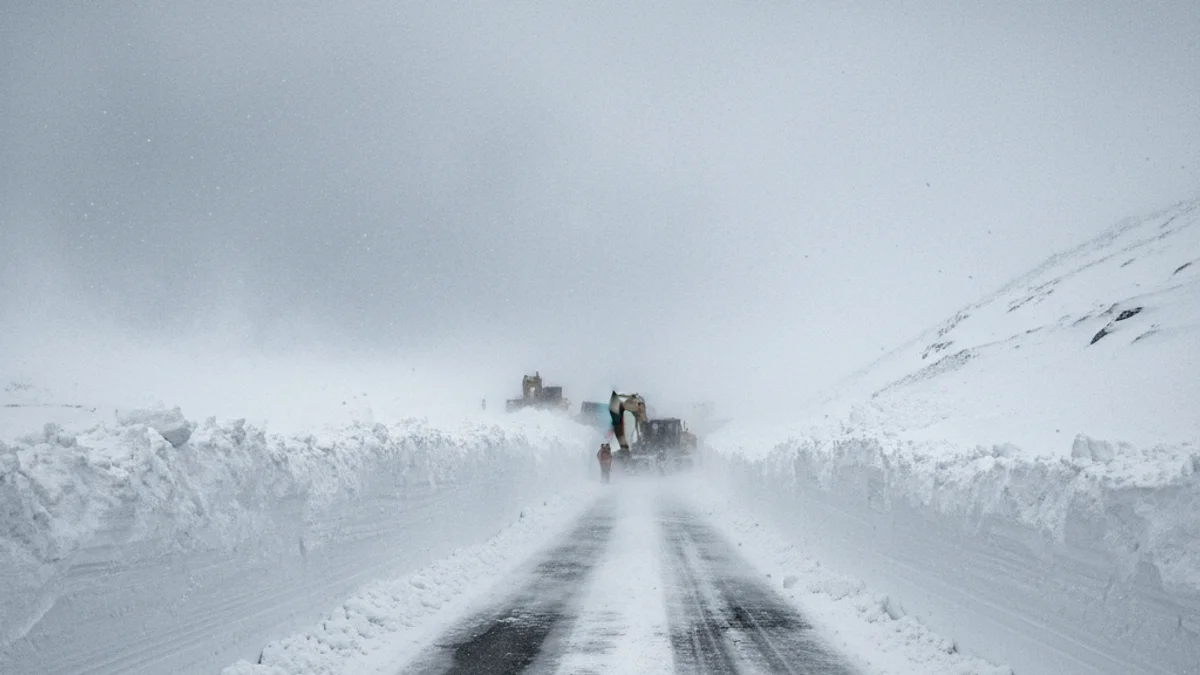
Yesterday, technicians carried out five controlled detonations using hydrogen gas at specific points on the slopes where the snowpack showed strong instability. This action was necessary to clear the C-28 road, which had been cut off since Saturday night due to a natural avalanche. According to the Centre Lauegi, the avalanche danger level increased to "very strong" (level 4-5) due to the accumulation of large amounts of snow, exceeding two meters in depth at the highest elevations.
The day was also marked by mandatory chain use on several roads, including the C-142b in Naut Aran and the C-28 in Alt Àneu. In the afternoon, a severe storm crossed the Noguera, Urgell, and Segarra regions from west to east, bringing hail and sleet to towns like Balaguer and Cervera, causing temperatures to drop sharply to around 3 degrees Celsius.
Protecció Civil maintained the Neucat and Vencat emergency plans activated in anticipation of further snow and rainfall, which the Servei Meteorològic predicted would last until noon today. The warning affected virtually all Pyrenean regions, including Aran, Pallars Sobirà, Alt Urgell, and Cerdanya, where accumulations of over 30 centimeters were expected above 2,000 meters. Trànsit reinforced Mossos controls due to the snow episode.
Regarding rainfall data, the city of Lleida surpassed 100 liters per square meter so far in January 2026, making it the second wettest January in the last 114 years. Only January 1996 recorded higher precipitation, according to Aemet data. The Bombers (Firefighters) received about thirty calls related to the storm, mainly concerning fallen trees and landslides, such as the one that required intervention on the ISR-12 road in Les Oluges.