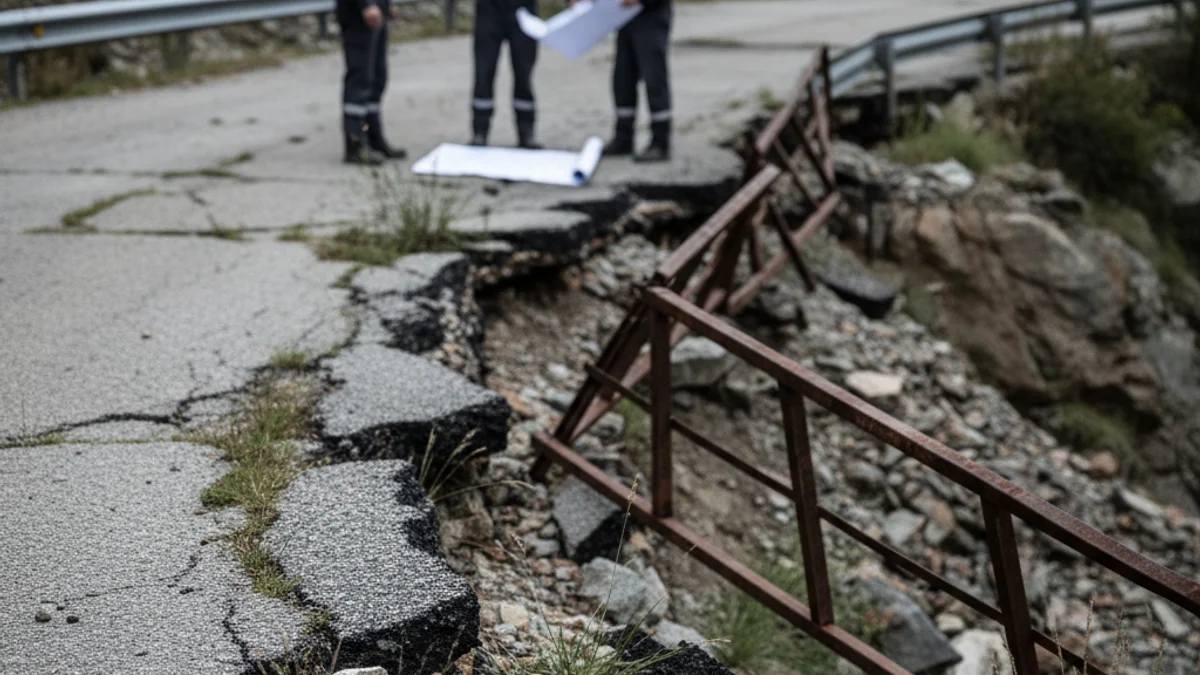
The section of the N-260 (the Pyrenean Axis) between Xerallo and El Pont de Suert has historically been known as the 'road of shame' due to its poor condition. The renovation of this national road was paralyzed shortly after Josep Borrell, native of La Pobla de Segur, ceased to be Minister of Public Works in 1996.
The announcement made by Albert Dalmau, Minister of the Presidency and acting President, during the 'Connectem el Pirineu' conference in Tremp, represents a breakthrough after nearly 30 years. This project is part of infrastructure agreements between the Central Government and the Generalitat, with the former providing funding and the latter handling execution.
It cannot be tolerated that there is a two-speed Catalonia.
In addition to the N-260, Dalmau indicated that works have been tendered to upgrade the Comiols pass, between El Pont d'Alentorn and Vall-llebrera, improving the connection between Pallars Jussà and Noguera. He also announced that in March, the installation of fiber optics will be tendered for the 47-kilometer stretch of the Pyrenean Axis between Puigcerdà and La Seu d'Urgell.
These initiatives are crucial to alleviate the historical investment deficit accumulated by the mountain regions of Lleida. Territorial rebalancing requires positive discrimination in infrastructure and services to allow less populated areas to compete on equal terms.