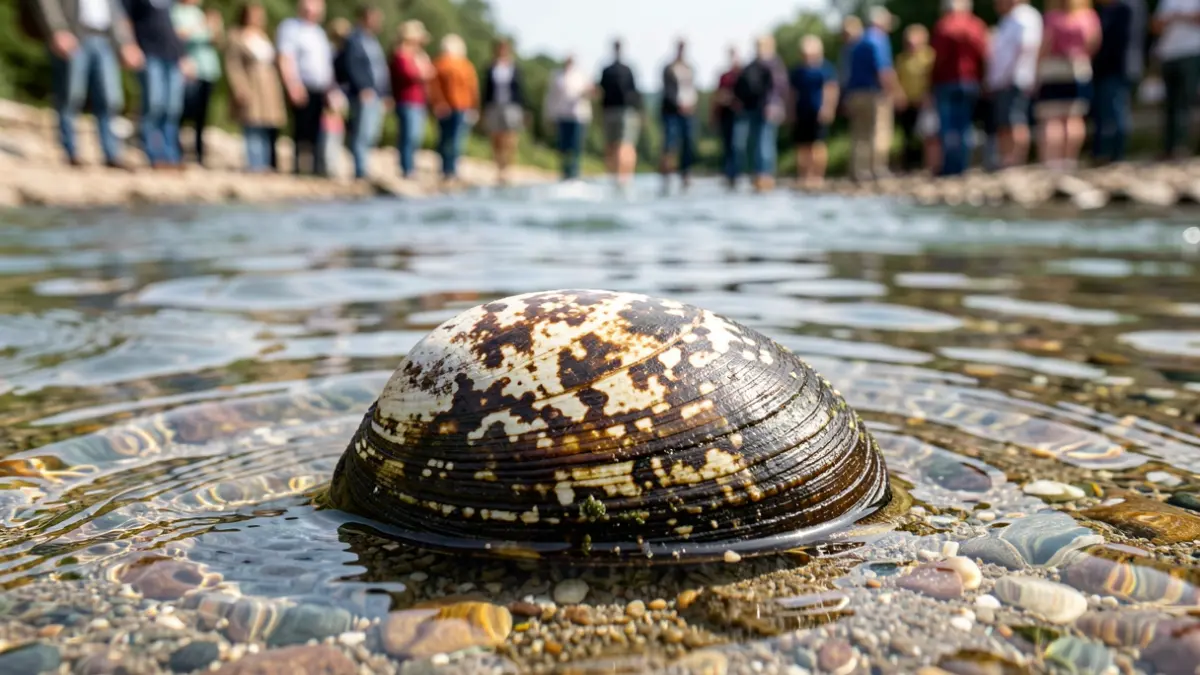
The release of 52 specimens of the elongated freshwater mussel into the Fluvià River aims to ensure the conservation of this protected species and promote the establishment of a healthy population within the Parc Natural de la Zona Volcànica de la Garrotxa. This initiative will also contribute to the species' expansion throughout the rest of the river's course.
Freshwater mussels play a crucial ecological role in water purification through filtration. Their life cycle, which includes a parasitic phase on native fish such as barbel and carp, makes them sensitive indicators of the quality and conservation status of aquatic ecosystems.
The chosen release site, en Prat d’en Gou, upstream of Olot, offers optimal conditions for the species: riverbanks with roots, dense riparian forest, clean sediment, and quality water. Recent surveys in the Fluvià River, including sections near Olot and at Font de la Gruta, have confirmed the resilience of the mussel population against impacts such as Storm Glòria (2020) and the intense drought (2021-2023).
The reintroduced specimens originate from the freshwater mussel laboratory at the Estany de Banyoles. They were born in 2015 and, after ten years, have reached a size of 4.5 centimeters, considered adequate for their survival. Their breeding is part of the LIFE POTAMO FAUNA project (2014-2017), focused on conserving European freshwater fauna in the Natura 2000 network of the Ter, Fluvià, and Muga river basins, using parental specimens from the Fluvià River itself.