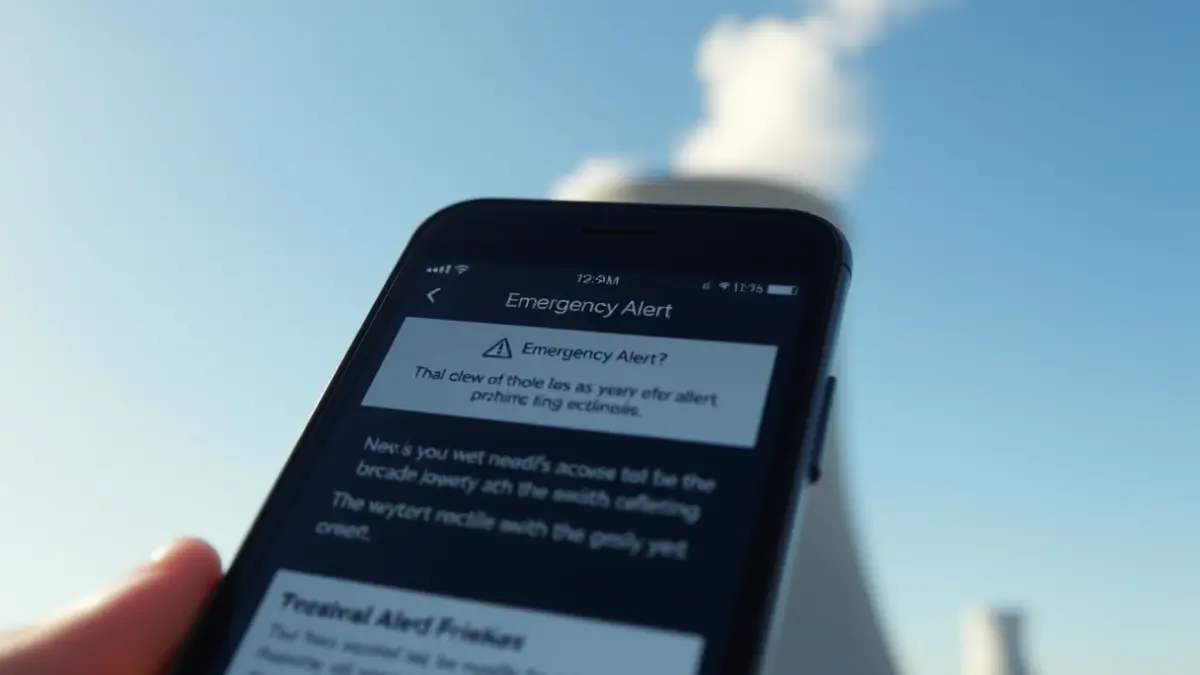
The mobile phone alert test, carried out last week by the General Directorate of Civil Protection of the state government in the PENTA 1 d'Ascó area, has prompted several considerations from the president of the Ribera d'Ebre Regional Council and mayor of Flix. Although acknowledging that the test functioned correctly, significant nuances have been highlighted.
“"Calling a simple mobile alert test a drill is, I think, a bit excessive. Especially considering that a real drill, with the participation of responders and the civilian population, is something that all municipalities in the nuclear area have been demanding for many years. We hope that one day we can talk about a real drill."
In addition to the conceptual issue, the need to incorporate mobile telephony into nuclear alerts has been emphasized. Currently, nuclear emergency plans do not foresee the use of this technology, relying mainly on fixed or vehicle-mounted public address systems. This situation is concerning, as zone 1 of the Ascó nuclear plant has many mobile coverage deficiencies.
“"From this drill, mobile phones should be incorporated into nuclear alerts, because right now they are not foreseen. We should consider updating emergency plans to incorporate such a present and massive technology. We hope that progress will be made in this direction and that in a few years we can talk about operational normality and also coverage to use mobile phones in the event of a nuclear emergency."