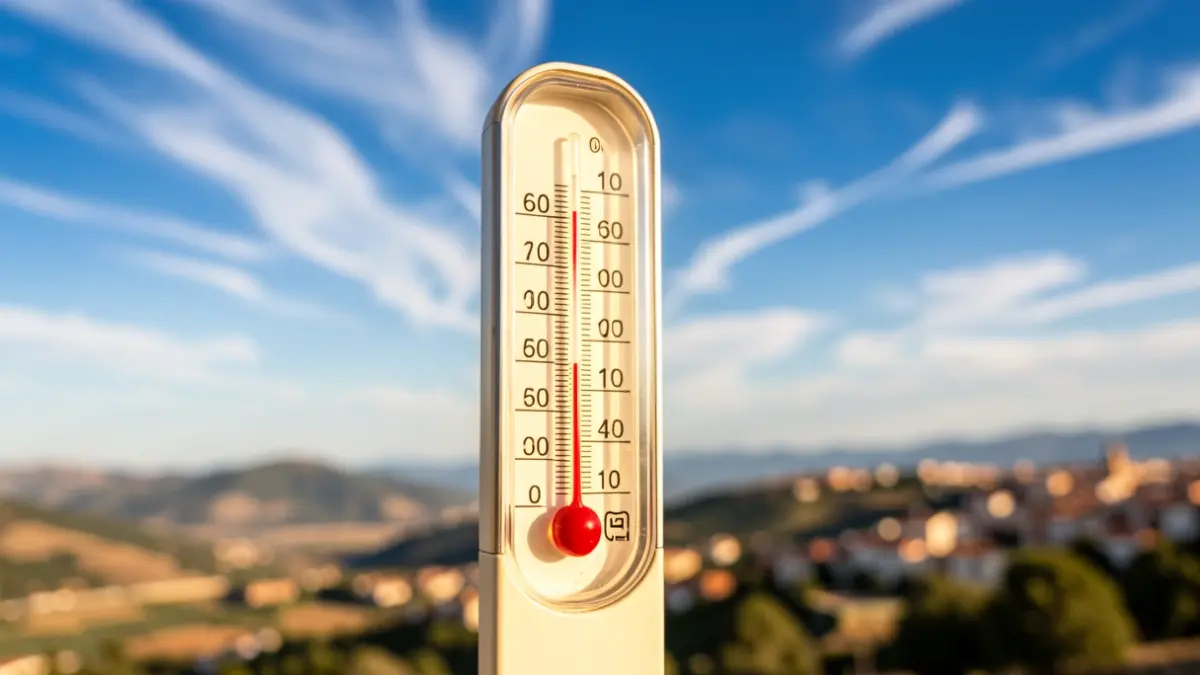
The definition of a heatwave varies among organizations. The World Meteorological Organization (WMO) specifies five consecutive days of extreme heat, while the Servei Meteorològic de Catalunya (SMC) and the Spanish State Meteorological Agency (AEMET) require three days. However, the temperature thresholds for considering heat 'extreme' also differ between them.
The SMC uses the 98th percentile of the daily maximum temperature for summer months (June, July, August) from the 2015-2024 period. This value represents the temperature that has only been exceeded on the 2% hottest days. For instance, in Vinebre, the 98th percentile is 40.9 °C. AEMET, conversely, uses the 95th percentile based on July and August from 1971-2000, resulting in generally lower thresholds.
During the late May heatwave, critical days were Thursday and Friday, which set numerous records. However, the three-day consecutive duration threshold was not met. Furthermore, despite isolated records, only a small fraction of the over 180 stations in Meteocat's XEMA network exceeded their percentile thresholds, an amount deemed insufficient to activate warnings.
The most significant record, 39.5 °C in Vinebre (the highest temperature for a May in Catalonia), fell below the locality's percentile (40.9 °C). This highlights the challenge of applying summer thresholds to May conditions and how global warming causes percentiles calculated for recent periods to rise, requiring higher temperatures for warnings.
Beyond meteorological milestones, heatwaves have health implications, particularly for infants, young children, the elderly, and those with chronic illnesses. This raises questions about the appropriateness of outdoor work or study in high temperatures, regardless of the time of year. It prompts reflection on whether increased acclimatization due to global warming justifies raising danger thresholds.