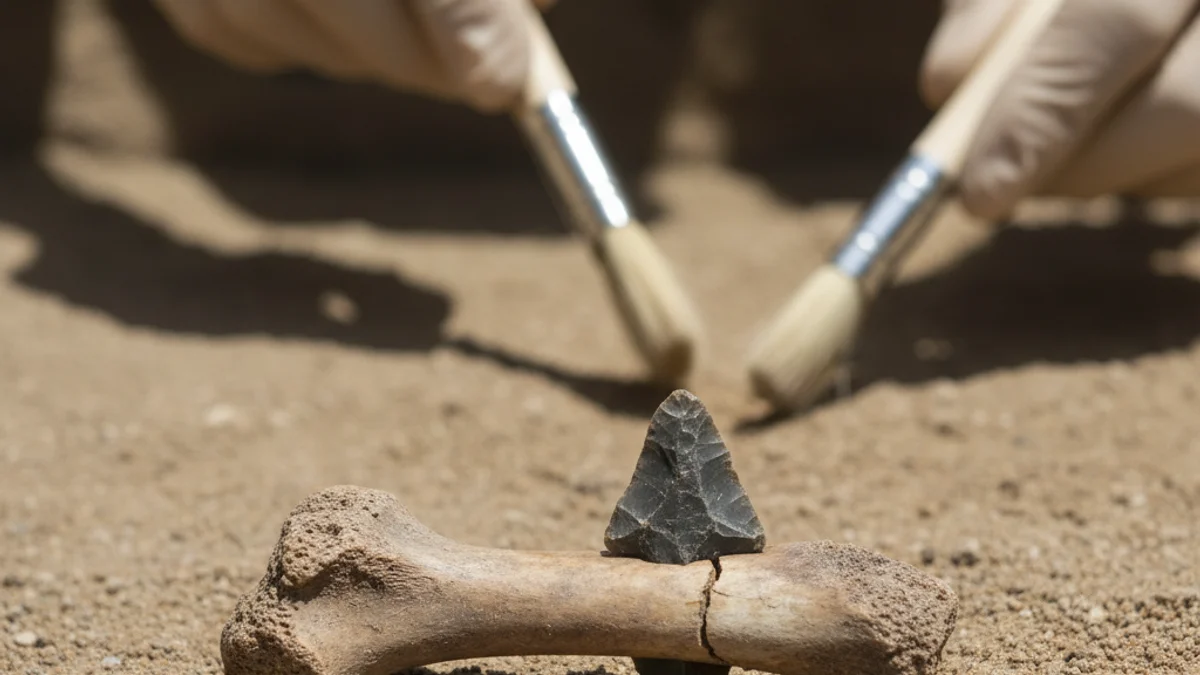
This finding, considered highly relevant by the scientific community, provides direct evidence of interpersonal violence or a hunting accident during prehistory in Catalonia. The rib, which features the perfectly lodged flint or bone tip, was recovered during routine excavations at the site, whose exact location is being kept confidential for conservation reasons.
Experts from the Prehistory department at the University of Barcelona, collaborating on the project, indicated that preliminary analysis suggests the injury may have been the cause of the individual's death. The position and depth of the arrow indicate a high-energy impact. Such remains are extremely rare, as organic materials and traumatic injuries often do not preserve well over millennia.
The Ripollès area is known for its rich archaeological history, with numerous settlements spanning from the Paleolithic to the Iron Age. The finding of the rib with the arrowhead reinforces the importance of this region as a key location for understanding the social dynamics and subsistence patterns of prehistoric populations inhabiting the Pyrenees.
The remains will be transferred to the Archaeological Museum of Catalonia for more precise dating and detailed study, which will include 3D scanning techniques to determine the angle of impact and the type of weapon used. Final results are expected to be presented at an international conference later this year.