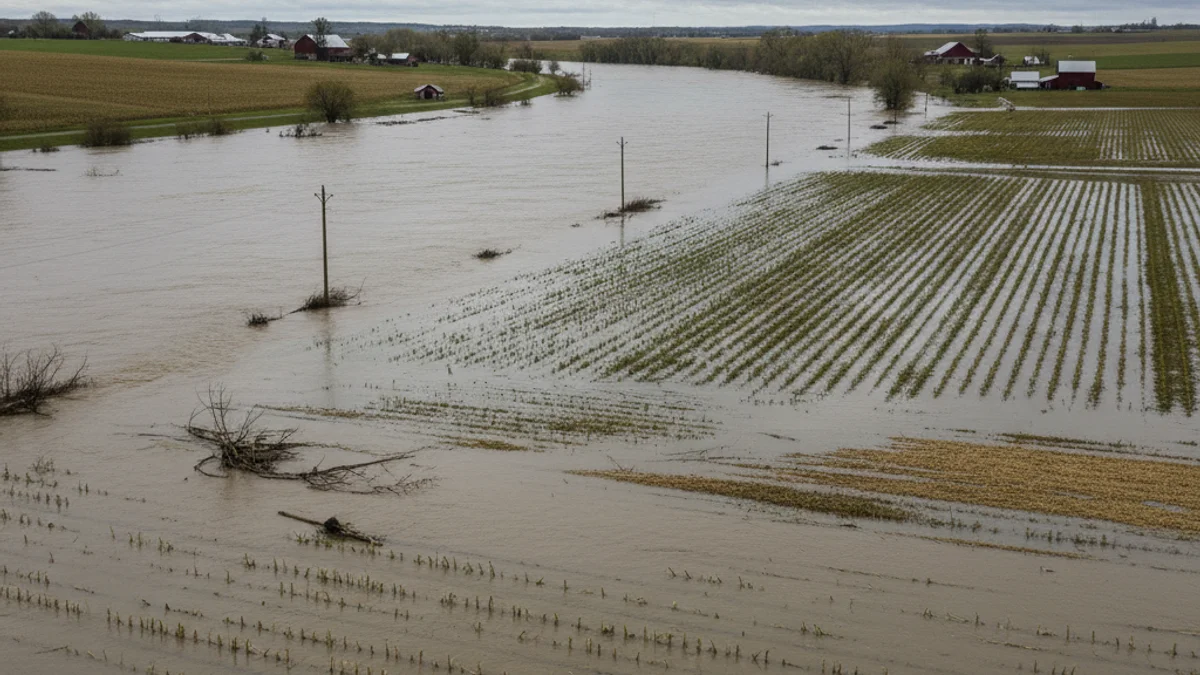
The situation in the province of Lleida has been exceptional, with accumulated precipitation in January in the capital being the second highest recorded in the last 114 years. This excess water comes less than three years after the extreme drought forced the closure of the Canal d’Urgell for the first time in over a century and a half of history.
This succession of storms, which has caused historical floods in Andalusia, is being used by climate change deniers to claim that the rain proves them right. However, experts point out that these extreme phenomena are, precisely, one of the main effects of global warming.
The continuous passage of Atlantic fronts is due to a high-pressure block in the Arctic, causing them to circulate much further south than usual. Although it is not clear if this block is directly caused by climate change, it is known that a warmer atmosphere accumulates more moisture, releasing water much more intensely when conditions are right.
Apart from meteorological phenomena, the editorial also focuses on Internet freedom following the announcement by President Pedro Sánchez to prohibit social media access for minors under 16 years old. This measure has provoked an angry reaction from platform owners like Elon Musk (X) and Pavel Durov (Telegram), who have labeled it a threat to freedoms.
The editorial recalls that behind social networks are owners who use them for their benefit, as demonstrated by the accusations against Durov in France for failing to cooperate on drug trafficking or child sexual content, casting doubt on his defense of civil liberties.