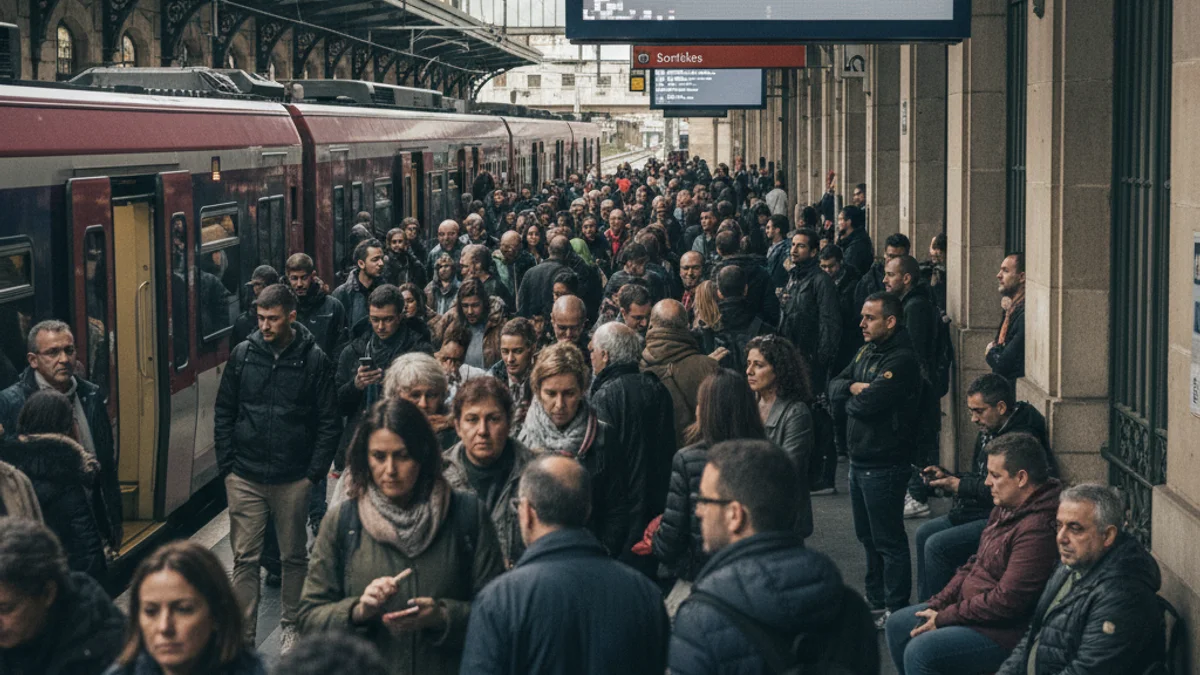
The singer-songwriter and leader of the ANC has expressed his outrage over the chaos in the Rodalies commuter rail network, which he considers a consequence of chronic underfunding lasting decades. This situation has led the independence movement to take to the streets again, as they did in 2007, to protest against the state of a railway network that is “falling apart.”
“"Belonging to Spain sinks Catalonia."
Llach deeply regrets the “over-scheduling” of the protests planned for February 7, where the ANC called a demonstration at noon and various user platforms (supported by entities like Òmnium Cultural and parties like ERC) scheduled another five hours later. The ANC president questions why they were asked to cancel their protest for being “too pro-independence.”
“"Wanting to achieve independence through autonomism is something philosophically complicated to explain."
The pro-independence leader rejects that new funding or the transfer of infrastructure management are the solution, arguing that the State treats Catalonia “just as badly as in 2007 or worse.” According to Llach, the cause of the Rodalies problem is “structural to the State” and stems from a “colonial” mindset that seeks the “continuous embezzlement” of Catalan structures.
Finally, Llach criticized the Government's handling of the crisis, noting that its obligation is obedience, while the PSC defends the interests of the PSOE. He concluded that independence is not a symbolic goal, but an objective of survival against continuous spoliation.