'North and South: Science for Prevention' is an initiative by Agrotecnio that uses science, theatre, and educational games to explain how social and economic inequalities affect health. The project aims to answer why the same disease can have different consequences depending on where one lives, focusing on leishmaniasis.
Coordinated by Dr. Diana Gassó, an Agrotecnio researcher and professor at the University of Lleida (UdL), the initiative is based on a real research experience conducted in Karamoja, northeastern Uganda. The lessons learned on the ground are now being transferred to the educational sphere in Catalonia, the Valencian Community, and Andorra.
The project combines scientific content with theatre, games, and other pedagogical resources to explain the transmission of vector-borne diseases, the environmental and social factors influencing health, and the unequal access to prevention and treatment worldwide.
The project originated in 2024 with an initiative by the Andorran veterinary NGO Daktari in the Karamoja region. Between January 2025 and January 2026, four researchers linked to the project undertook field stays funded by the UdL's Unit for Cooperation and Solidarity to study leishmaniasis vectors and evaluate phlebotomine capture systems, including a low-cost trap from the FleboCollect project.
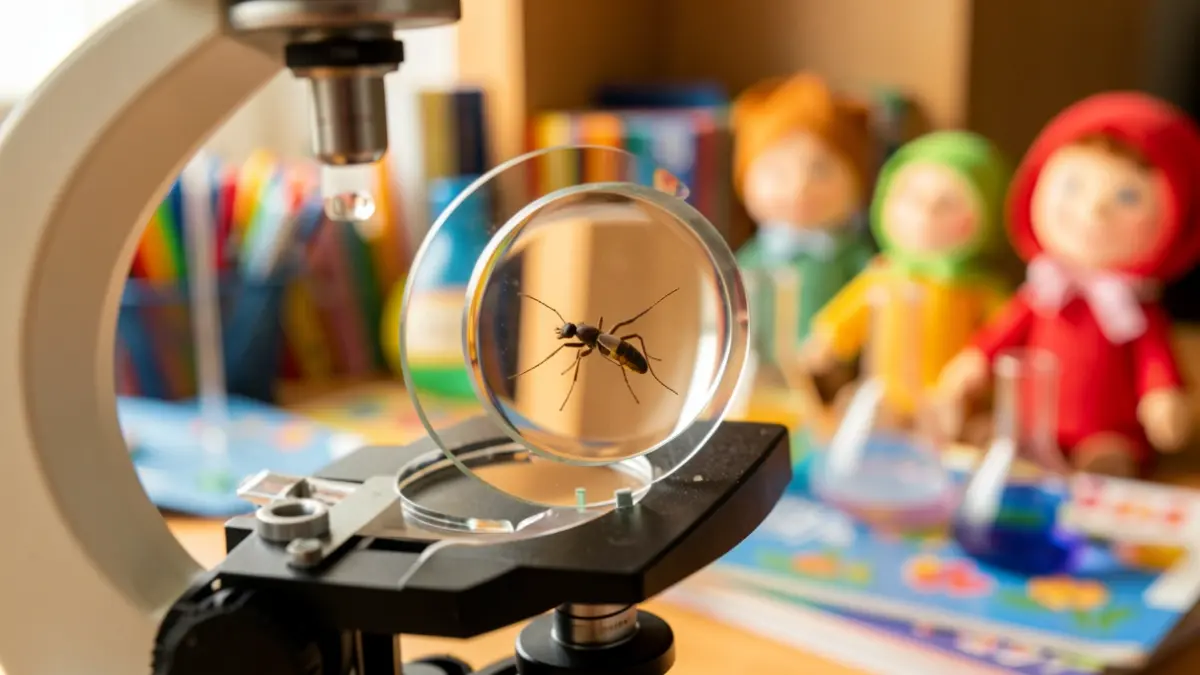
To bring this experience to educational centres, three travelling educational kits will be created, adapted to the contexts of Catalonia, the Valencian Community, and Andorra. These kits will include a puppet theatre play, phlebotomine specimens, magnifying glasses, educational games, audiovisual resources, and teacher guides. A children's story will also be translated and published in Catalan, with 500 copies planned.
The activities will incorporate methodologies such as game-based learning, promoting active student participation. A pilot test will have an intergenerational dimension, where secondary school students will prepare theatrical performances and outreach activities to share knowledge with younger children and the elderly.
Visceral leishmaniasis, a potentially fatal parasitic disease, particularly affects children and pastoral communities in Karamoja, who often face difficulties accessing healthcare services. The project will explore in classrooms how social, economic, and environmental conditions influence disease prevention and treatment.
Furthermore, the One Health concept will be introduced, viewing human, animal, and environmental health as interconnected dimensions, and the relationship between climate change and vector-borne diseases will be examined.
The project, with an estimated duration of 18 months, will evaluate its results by comparing students' knowledge before and after the activities. The ultimate goal is to produce reusable educational materials and guides for other schools.