The first edition of the Agrobiotech Innovation Forum at Fira de Lleida consolidated itself as a key meeting point for the agri-food and bioindustrial sector, aiming to accelerate solutions that combine technology, sustainability, and business. Eurecat, as a leading technology center, played a prominent role in the forum's conceptualization and narrative, contributing its expertise in integrating high-impact technologies.
“"It has allowed us to have a structured framework to present, analyze, and refine projects, and, above all, to highlight our differential value as a technology center: integrating key technologies to solve real needs, accelerating innovation, and transforming knowledge into proven, scalable solutions with a direct impact on business competitiveness."
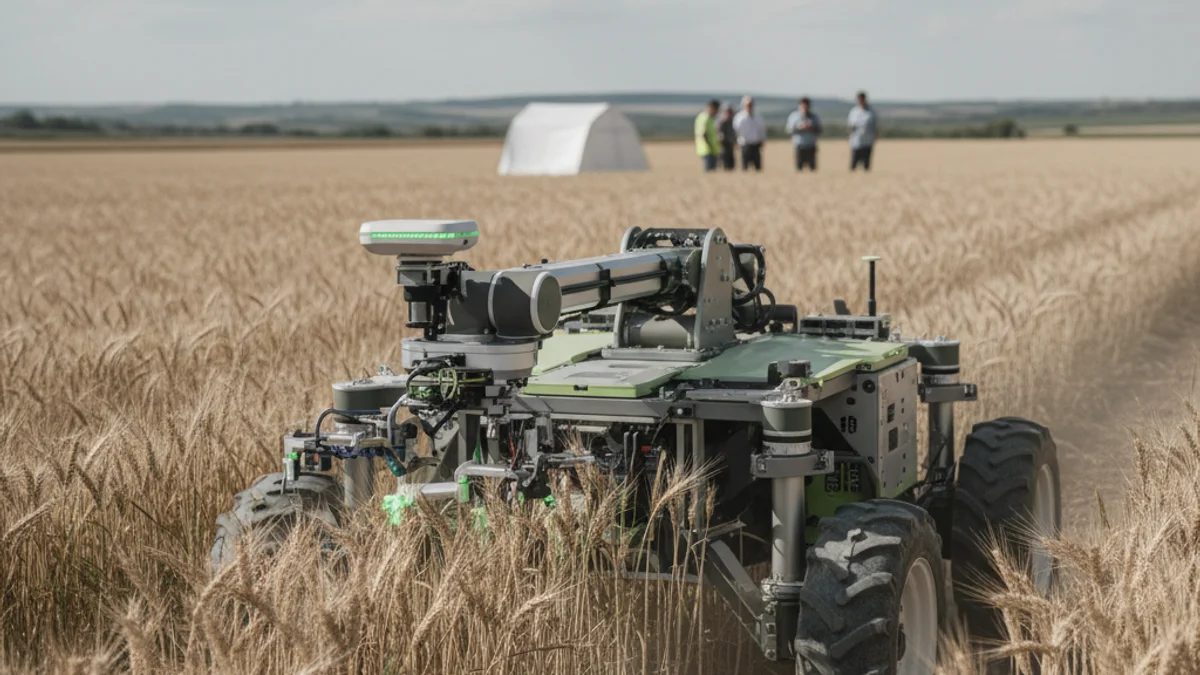
The application of innovation focused on verticals such as robotics and artificial intelligence (AI) for agriculture, with the participation of Daniel Serrano, Director of Eurecat's Robotics and Automation Unit. Examples of autonomous robotic platforms and decision algorithms were shown for critical field tasks, such as crop monitoring and input management. Furthermore, in the bioeconomy and decarbonization vector, Eurecat emphasized circularity, exemplified by the work of the H2CAT network, coordinated by Miriam Díaz de los Bernardos.
The technology center also set up a demonstration area with a functioning autonomous agricultural robot to show the integration of technology into existing processes. High-impact projects were presented, such as iRAIN, an advanced system for the reuse of wastewater, and GO LIVLAB-IN, a circular bioeconomy initiative based on insect farming to valorize vegetable by-products.
“"Innovation must be measured by what changes on the ground: less water and energy consumption per unit of product, fewer losses, higher quality, fewer unplanned stops, greater traceability, and increased safety. Ultimately, a proposal to innovate with real impact."