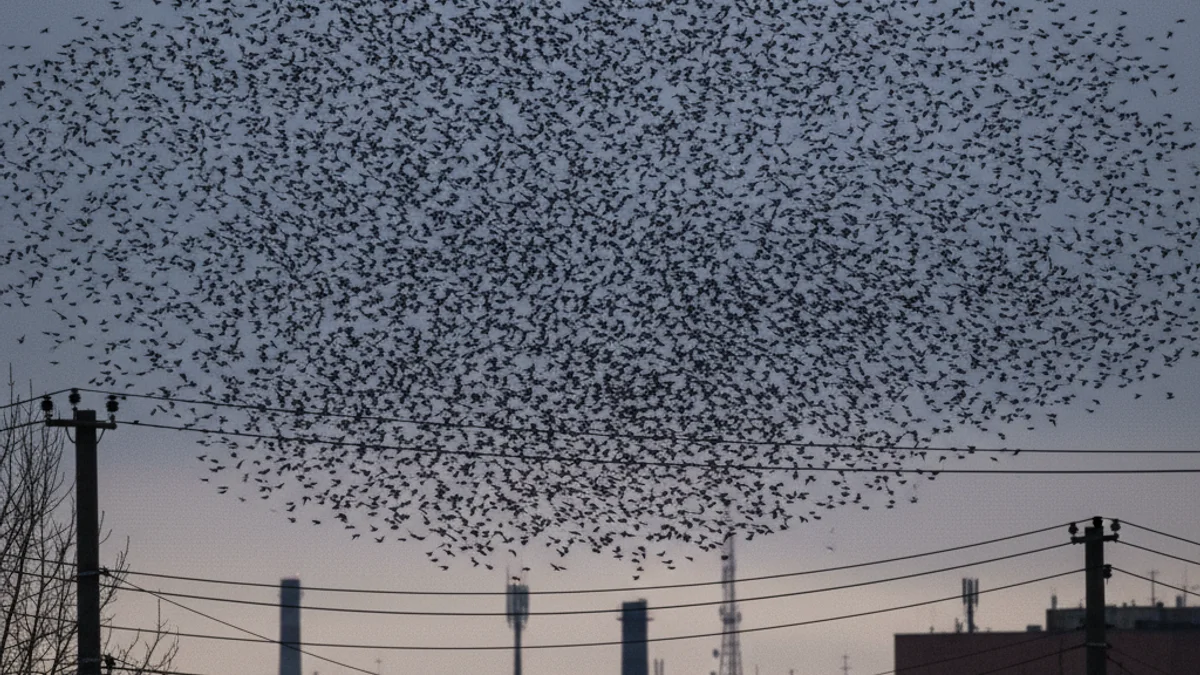
The visual spectacle of starling flocks arriving from Northern and Central Europe to winter in the Lleida region translates into a series of recurring problems for residents of cities like Lleida and Mollerussa. These birds, including the common starling (most visible between September and March) and the black starling, seek refuge in urban groves and electrical lines.
“"20 years ago, the Utxesa reed bed was the largest roosting site in Catalonia, with over a million specimens."
Complaints focus on the dirt generated by droppings covering squares and streets, and the constant noise. In Lleida and Mollerussa, campaigns have been carried out to drive them away using acoustic emitters and lasers, especially in areas like the Arnau de Vilanova Hospital or the Mollerussa Canal, although their effectiveness is limited as the birds become accustomed to them.
“"They come to winter, and there are more of them every year because they have adapted to the climate."
The company Endesa has also pointed out the impact of these birds. Although each starling weighs about 60 grams, the concentration of thousands of specimens on electrical cables causes significant fluctuations in the network, generating micro-cuts in lines supplying areas such as Les Garrigues or Segrià.
According to Cristina Sánchez of Seo BirdLife, the phenomenon intensifies due to extreme temperatures in Northern Europe. The black starling is protected, and only deterrent measures can be applied, while the common starling can be hunted. However, since both species coexist, the administration does not classify them as a plague.