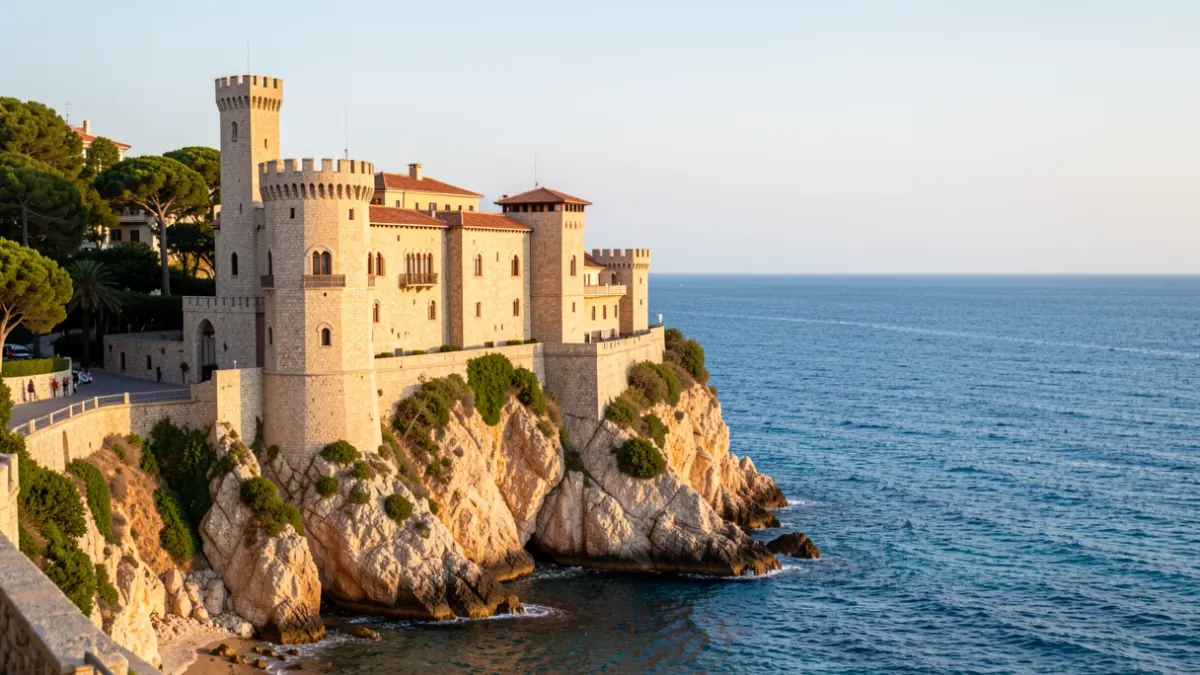
Strolling along the coastal path in Lloret de Mar offers a view of a unique construction atop a small cliff, evoking fairytale imagery with its towers and sea vistas. Despite its medieval appearance, this building was not conceived as a defensive fortress.
In reality, the construction dates back to 1935 and was designed as a private residence by the industrialist Narcís Platja. The architecture follows the historicist style prevalent in the early 20th century, imitating medieval castle forms to express social prestige and artistic value, rather than a military function.
Its strategic location on the cliff provides a privileged perspective of the coastline, recalling the municipality's historical ties to maritime trade and navigation, now largely replaced by tourism.
This castle represents a key heritage element for Lloret de Mar, posing challenges in distinguishing between appearance and the true history of buildings, and reflecting on how each era leaves its mark on the landscape.
The castle, in a municipality so associated with tourism, invites a more critical view of the landscape. This perspective aligns with Sustainable Development Goal SDG 11, promoting the protection of cultural heritage, and SDG 4, fostering critical education to understand the past and the construction of place identity.