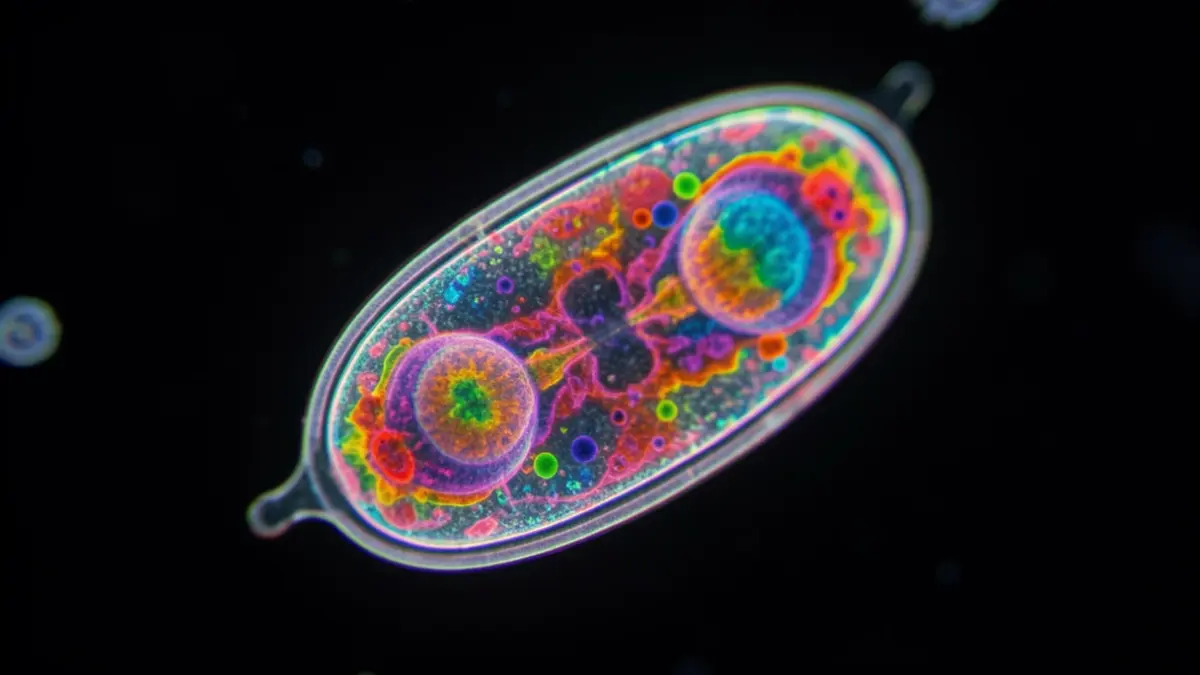
The discovery, made by researchers from the IBE (CSIC-UPF), reveals a microorganism that does not belong to any known amoeba order and possesses the ability to mobilize two independent poles without dividing, a phenomenon described as a "double amoeba".
The study, recently published, provides the complete genomics of A. explorator and analyzes the evolution of proteins in amoebozoa, animals, and fungi, offering relevant information about their evolution and potential implications for health and ecology.
According to the study's first author, Àlex Gàlvez-Morante, the observed "bipolarization" resembles cytoplasmic bridges between animal cells, which could be key for comparative study. Furthermore, the amoeba demonstrates communication capabilities with other cells through subpseudopods and can form "feeding fronts" to collectively advance on bacterial biofilms.
The study's lead, Daniel Richter, emphasizes that this new lineage is so distant from known ones that it suggests the existence of many other amoeba species yet to be identified. Apostamoeba explorator moves using pseudopods, temporary cellular extensions, expanding knowledge about the microscopic diversity of the Catalan coast.