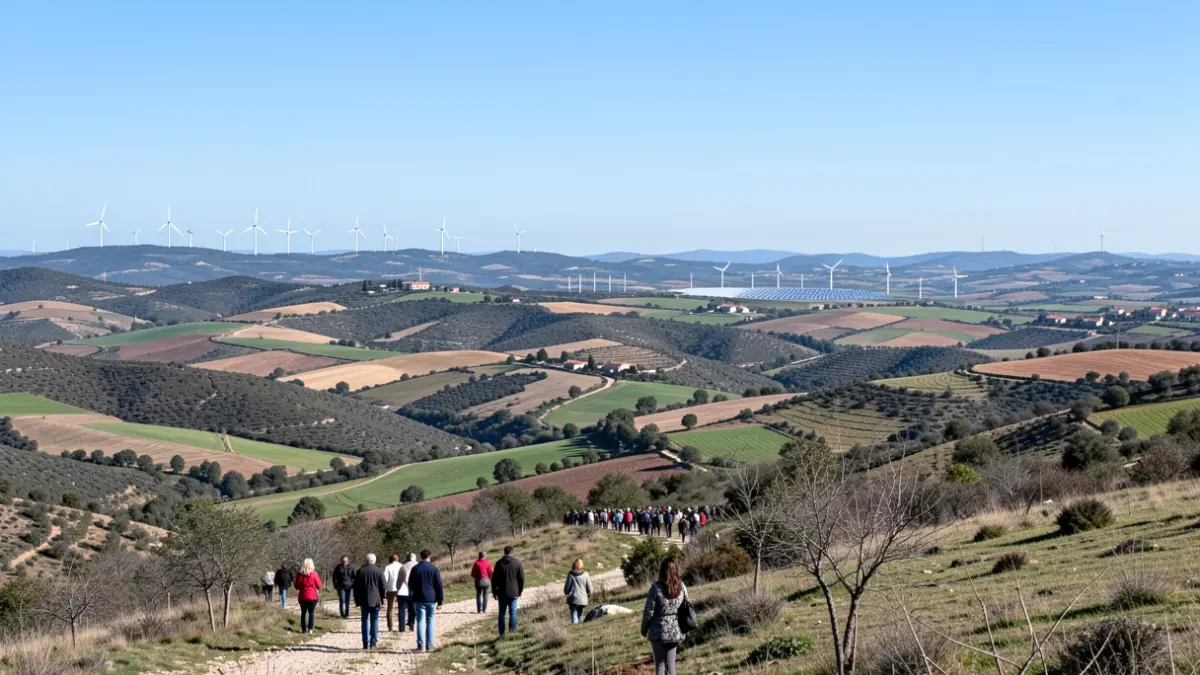
The municipalities of Solsonès have expressed unanimous rejection of the Catalan Territorial Sectorial Plan for Renewable Energies (PLATER), promoted by the Generalitat. They argue that the plan has not sufficiently considered the territory's reality and anticipates an impact of approximately 2,700 hectares in the region, for both wind and photovoltaic energy.
The president of the Comarcal Council of Solsonès and mayor of Castellar de la Ribera, Claustre Sunyer, lamented that the plan has not met expectations, despite the wait for the document. She emphasized the need for greater involvement of the town councils in its development, an aspect that has not occurred and has caused surprise.
The mayor of Pinós and regional councilor for Renewable Energies, Xavier Vilalta, described the impact as "profound on the landscape" and defended the region's agricultural character. "The land is a tool for work, the basis of our lives, and a guarantee for the continuation of our farms," he stated, criticizing that the plan does not protect land with significant agricultural value.
The local governments have also criticized the short three-month period for submitting allegations, deeming it costly for their reduced municipal budgets. Vilalta cited the example of hiring a lawyer for Pinós, which will cost at least 2,000 euros, not including potential legal fees.
Furthermore, the situation of the Llosa del Cavall dam was highlighted, which after 30 years still does not produce energy due to administrative and judicial conflicts. The joint event served to call on the Generalitat to halt the processing of the PLATER and reformulate it with local participation.
The event was attended by promoters of a platform of municipalities against the PLATER, which already has over 280 adhesions. Their representatives reiterated that the territory "is not a blank slate" and that the current document entails "losing productive land, degrading landscapes, impacting biodiversity, and weakening local governments".