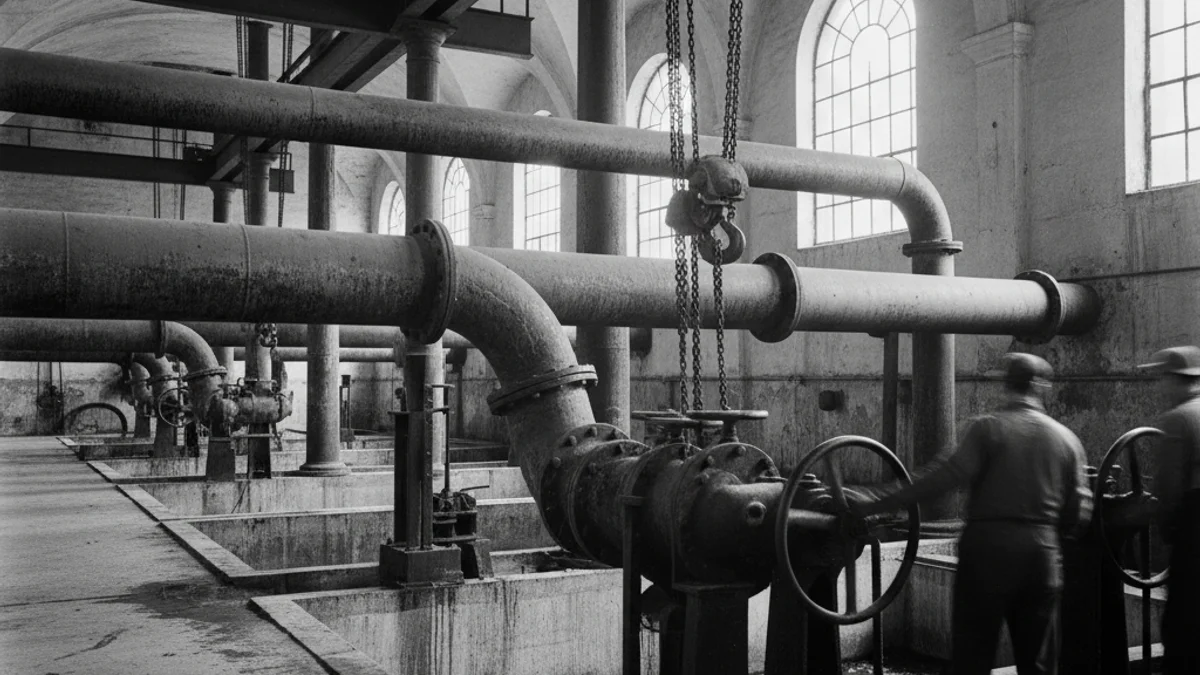
The magazine Òpidum, published by the Centre d'Estudis Lacetans and the Arxiu Comarcal del Solsonès, will soon publish an exhaustive investigation into the old Solsona sewage treatment plant. This facility, which became operational in 1929, has been confirmed as the pioneer throughout Spain, preceding those in Reus (1937) and Madrid (1950). The work complements the exhibition Aiguafina, Camins de l'Aigua at the Museu de Solsona.
“"We already knew the treatment plant existed, but what we have been able to confirm is that it actually worked. Initially, there were publications claiming it had not been operational, and that is not true: it was functioning correctly."
The director of the Arxiu del Solsonès, Jordi Torner, along with Ramon Queralt and Marcel·lí Corominas, have contextualized the entire construction process. The project was part of a much broader sewage plan for the city of Solsona dating back to 1924. Although the original project left the system to be installed open, the electrolytic system was finally chosen and entered service in 1929.
The research team has located graphic material and written documentation, including correspondence and plans, from the Arxiu Vicenç and other regional archives. However, the exact period of operation of the treatment plant is not entirely clear, although it appears to have operated until the early thirties, for about four or five years. The study will be presented on April 17, coinciding with the Sant Jordi festival.