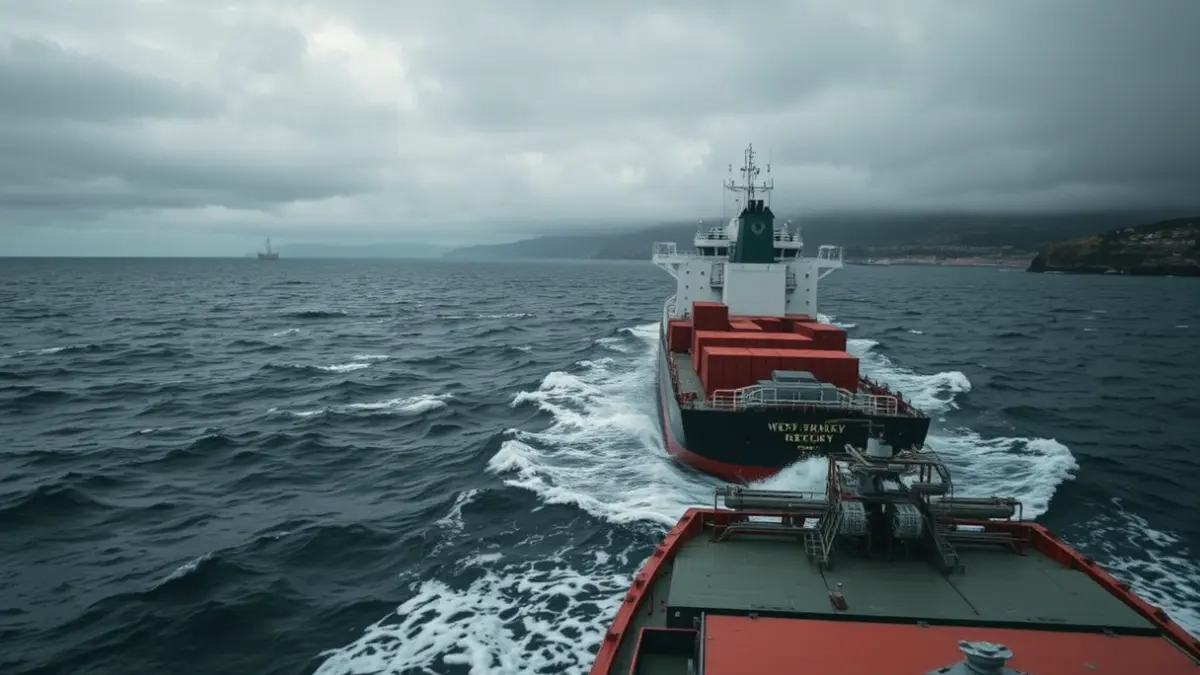
Major e-commerce platforms are already warning of delivery delays. This situation is mainly due to ships that previously crossed the Suez Canal now having to circumnavigate Africa via the Cape of Good Hope, adding about ten days to the journey.
“"Regarding parcel delivery, one must consider that everything coming from Shanghai to Europe that passes through the Suez Canal now has to go around the Cape of Good Hope, which means going around Africa. That's an extra 10 or 11 days."
This issue extends beyond the blockade in the Strait of Hormuz, which primarily affects goods like oil and gas. Tarragona, in this regard, is less affected in crude oil supply, as it mainly comes from the United States and Africa. However, the global trade impact is significant, as shipping companies avoid the Red Sea for safety.
The route change not only causes delays but also increases shipping costs. Initially, shipping companies may absorb some of this cost, but over time, price increases are passed along the entire supply chain, ultimately reaching the consumer. These delays particularly affect goods arriving at European ports like Rotterdam, from where they are distributed across the continent.
The conflicts in the region have had a direct impact on Tarragona's economy, with several companies postponing trade missions and real estate investments planned in affected countries.