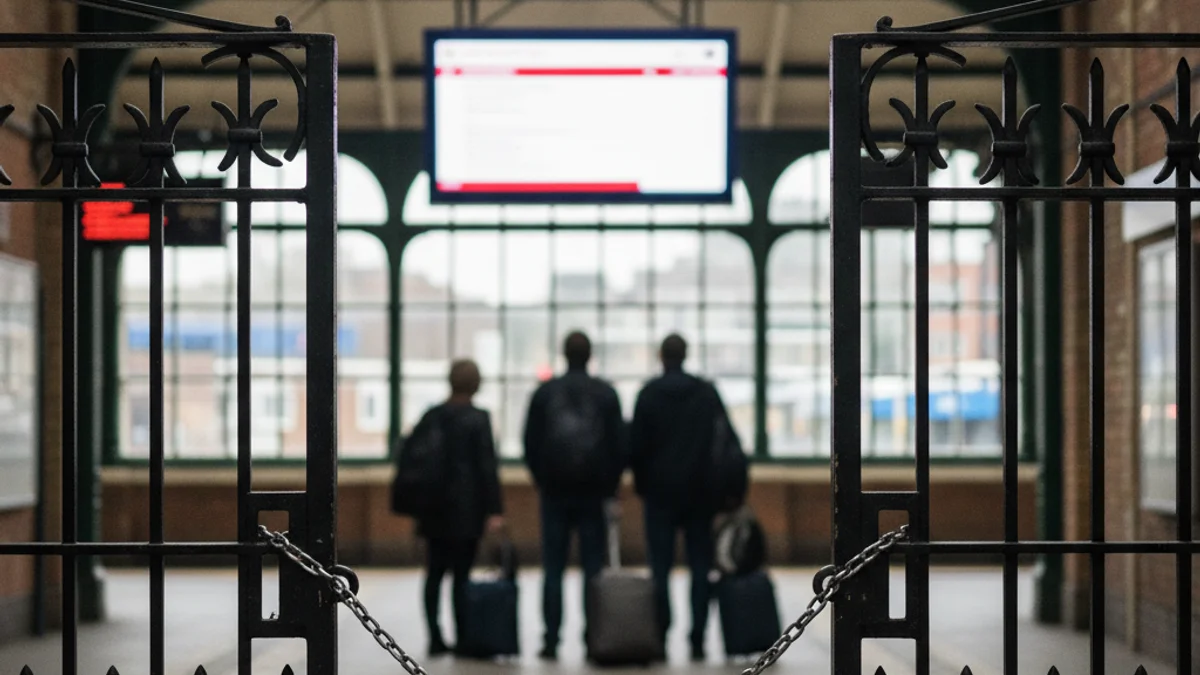
The day at the Tarragona city train station on Sunday morning was unusual, with few users and platform access completely closed. Information staff and ticket personnel attempted to redirect confused travelers to the bus station or the Adif station at Camp de Tarragona, where long-distance and high-speed trains circulate.
“"You don't have a connection to go there to catch the AVE, and afterwards, it's much more expensive. It triples the ticket price. It's extremely complicated: how does a student manage?"
The lack of service affected both residents and tourists. Brian, an American tourist spending a week in Tarragona, had to cancel his plans upon finding the suspension. "I came to make a 20-minute journey and found that the trains are not working," he explained, although he understood the need to ensure safety.
The alternative of going to the Camp de Tarragona station, located 14 kilometers away and with precarious public transport connections, has been criticized by users. Josep Maria and Anna, who were looking to travel to Barcelona next week, were instructed to go to the Camp, an option they consider unfeasible due to the high cost and difficulty of access.
The situation has also had an economic impact. Taxi drivers waiting for customers in front of the station at Plaça Imperial Tàrraco saw their turnover reduced by 60% compared to a normal Sunday, due to the disappearance of the regular flow of travelers.