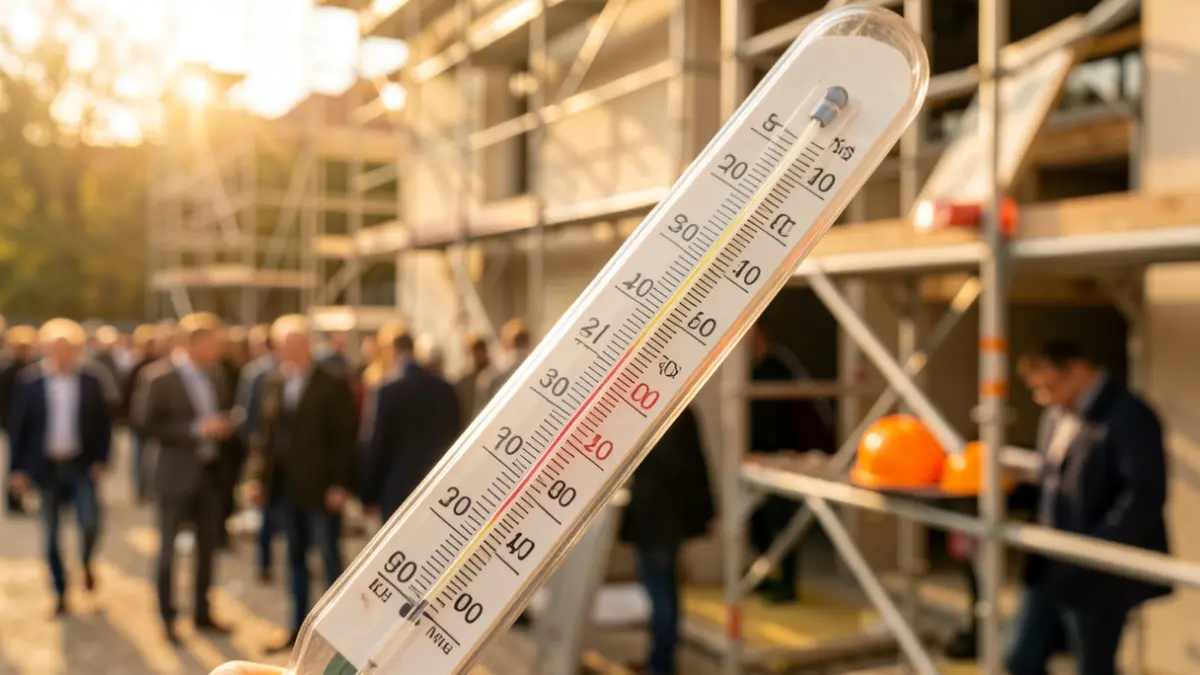
The Labor Inspectorate of Tarragona has placed approximately 2,000 companies, primarily in the construction and agriculture sectors, under surveillance due to this summer's high temperatures. The Generalitat has sent communications to 1,924 firms to emphasize the importance of safeguarding their workforce from heat-related risks.
The recurrence of heatwaves is prompting a reevaluation of working conditions. The Minister of Business and Labor, Miquel Sàmper, has indicated the need to modify work schedules, even suggesting that many employees might work night shifts in the future.
The Labor Inspectorate has strengthened its teams and provided strategic training on thermal stress to inspectors in Tarragona, along with equipment to measure workplace environmental conditions. Sanctions for non-compliance are also a key component; last year, 69 actions were taken, resulting in 40 requirements and 13 infractions totaling 32,912 euros in fines.
Laura Freixas, Director General of the Labor Inspectorate in Catalonia, stated that these actions are being repeated this year due to the necessity highlighted by the data.
Both the Gremi de la Construcció del Tarragonès (Tarragona Construction Guild) and Unió de Pagesos (Farmers' Union) are conducting educational outreach. Joan Romeu, president of the Construction Guild, explained that as early as April, recommendations were provided to companies, modifying routines and schedules, advancing the start of the workday to 7:00 AM, and avoiding the most strenuous tasks during the central hours of the day. Measures such as awnings, constant hydration, and protective creams are also being implemented.
In the agricultural sector, Carol Aixut, labor agreement representative for temporary workers and the environment at Unió de Pagesos, noted that farmers are adapting by starting work at five in the morning and using lighting systems for night work. Some schedules have been split, working from 8 AM to 12 PM and from 7 PM to 9 PM, an adaptation applied throughout the summer.
Prevention protocols include enhanced hydration, prohibition of isolated work, rotation, mutual employee monitoring, mandatory breaks of 15 minutes every 45 minutes of work, and the removal of exposed personnel. Regulations mandate constant monitoring and assessment for partial activity suspension.
Òscar Saladié, Dean of the Faculty of Tourism and Geography at the URV, emphasizes the importance of these protocols, particularly for outdoor salaried workers, framing it as an impact of climate change that requires a transversal and flexible approach.