The regularization of immigrants in the province of Tarragona, which has processed over 27,000 applications, is beginning to alleviate the staffing shortage that affected key economic sectors. The hospitality industry, in particular, has seen a significant improvement in filling vacancies for the summer months.
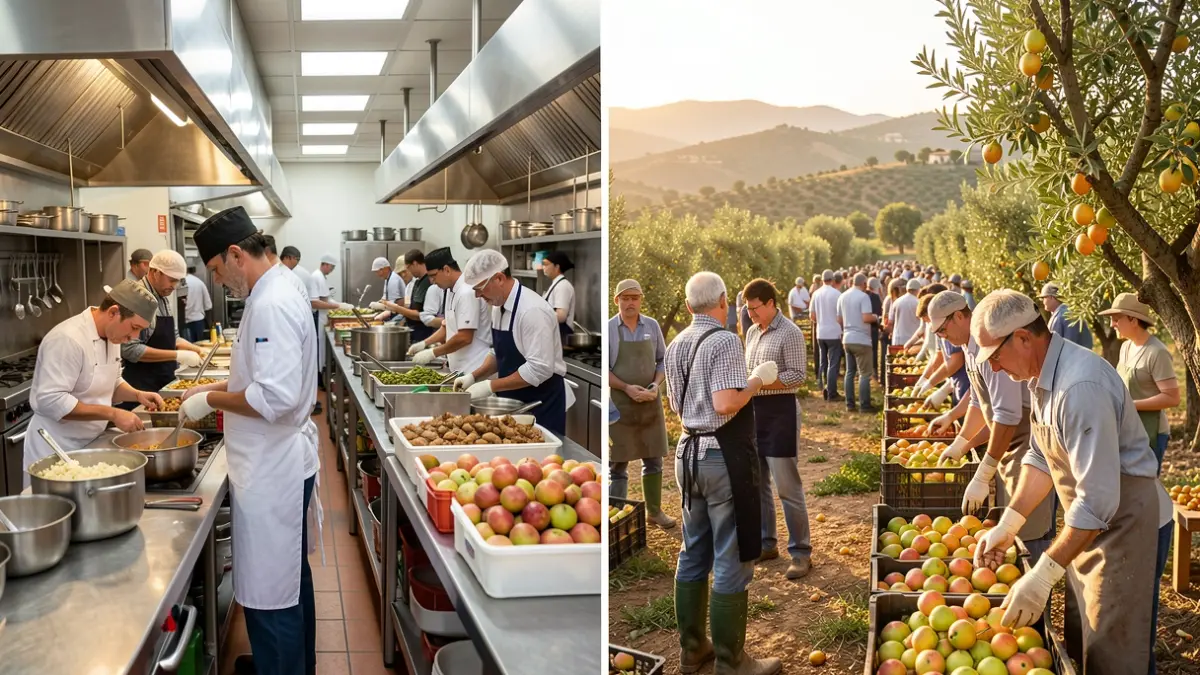
Ángel Pérez, commercial director of the El Pòsit group, which operates five restaurants in locations such as El Serrallo, Cambrils, and La Pineda, notes that this summer they found it easier to fill the usual 60 to 70 positions for July and August. "It's always very difficult to fill a portion of the staff, and this year we've noticed many more people available," Pérez admits. He emphasizes that immigration has always been a help to the sector, which requires more personnel due to the increase in restaurants and demand.
Pérez points out that in previous years, regulatory hurdles prevented the hiring of willing workers. He considers the regularization "important" for the sector, as Moroccans, Pakistanis, South Americans, and Sub-Saharan Africans are now reinforcing their teams. The group's workforce peaks at 220 people during the summer.
Javier Escribano, president of the Associació d’Empresaris d’Hostaleria de Tarragona (Tarragona Hospitality Business Association), confirms this trend, stating that there has been "more supply," allowing the sector to "choose." "There are more available workers, both from abroad and locally," he adds.
This state regularization has become a "breath of fresh air" for the economy and for the immigrants themselves. Many arrive with "ambition and a desire to work," enabling them to start from the bottom and climb the ranks. Escribano notes that a kitchen assistant or waiter with no prior experience can earn around 1,450 euros net, receiving training within the restaurants themselves.
The change has also been clearly felt in agriculture. Carol Aixut, head of Seasonal Workers and Agreements for the Camp sector at Unió de Pagesos (Farmers' Union), explains that they had long requested an "express regularization" due to a labor shortage. "Expectations have been met," she states, highlighting that many newly regularized individuals are now working in fruit harvesting or grape picking, providing "guarantees and continuity" to the sector.