The Ministry for Ecological Transition and Demographic Challenge (MITECO) has allocated 11.6 million euros from the Recovery Plan to 20 innovative projects in the province of Tarragona, under the Renoinn 2 program. These grants, reaching 18 municipalities, will enable a total investment of 44.6 million euros, contributing to decarbonization and energy transition goals.
The selected proposals stand out for their innovation and integration of renewables with storage across various productive sectors. The most significant investment is concentrated in Móra d’Ebre, with 5.7 million euros for an agrivoltaic installation featuring a 21.3-megawatt capacity and 67.7 megawatt-hour storage.
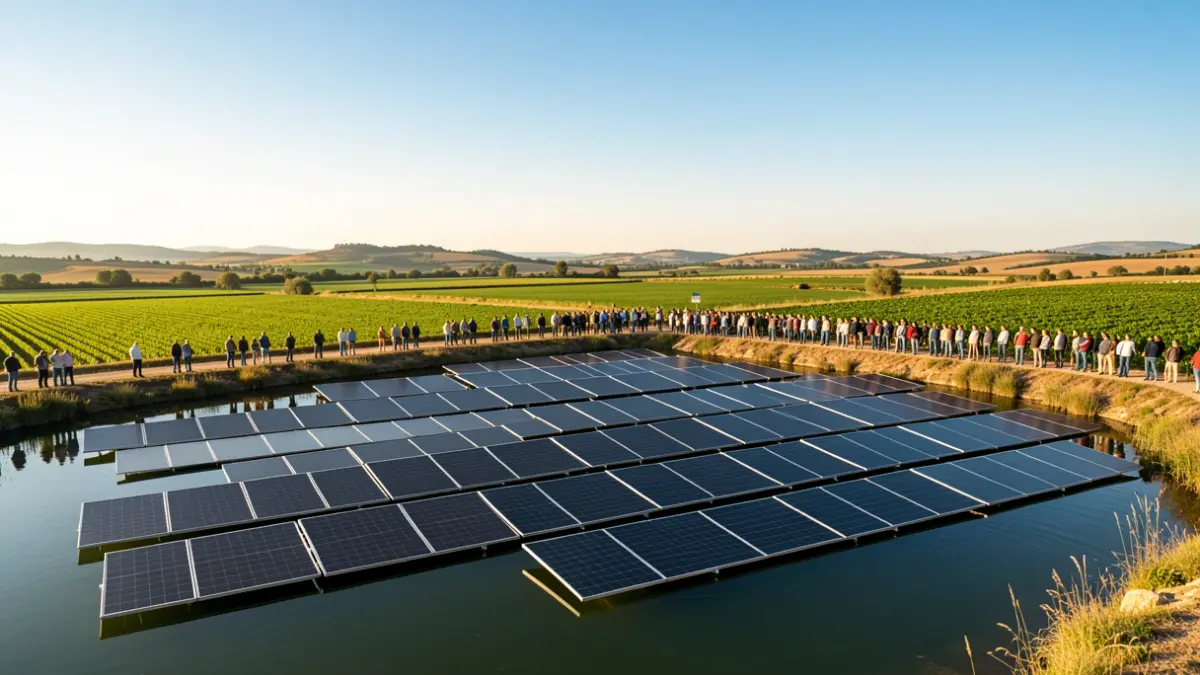
Another notable project is in Mont-roig del Camp, which will receive just over one million euros for a floating photovoltaic installation on water. Other initiatives include solar panels integrated into agricultural fields in Albinyana, and installations on various structures in Tarragona city, Cambrils, and Bellmunt del Priorat.
A total of 14 projects, 70% of the total, focus on collective self-consumption with storage, including vulnerable consumers. These installations will be distributed in locations such as Tarragona, Amposta, Flix, La Selva del Camp, Castellvell del Camp, Prades, Almoster, Vilaplana, and Tivissa. Two major proposals in Tarragona city will each receive over a million euros.
These grants significantly exceed those from the previous Renoinn 1 call in 2025, which amounted to 3.5 million euros. The involved crops are diverse, including cereals, olives, grapes, citrus, fruits, aromatic plants, and vegetables, ensuring compatibility with primary agricultural activity. Beneficiaries must submit annual reports on the installations' performance and their agricultural impact for five years.