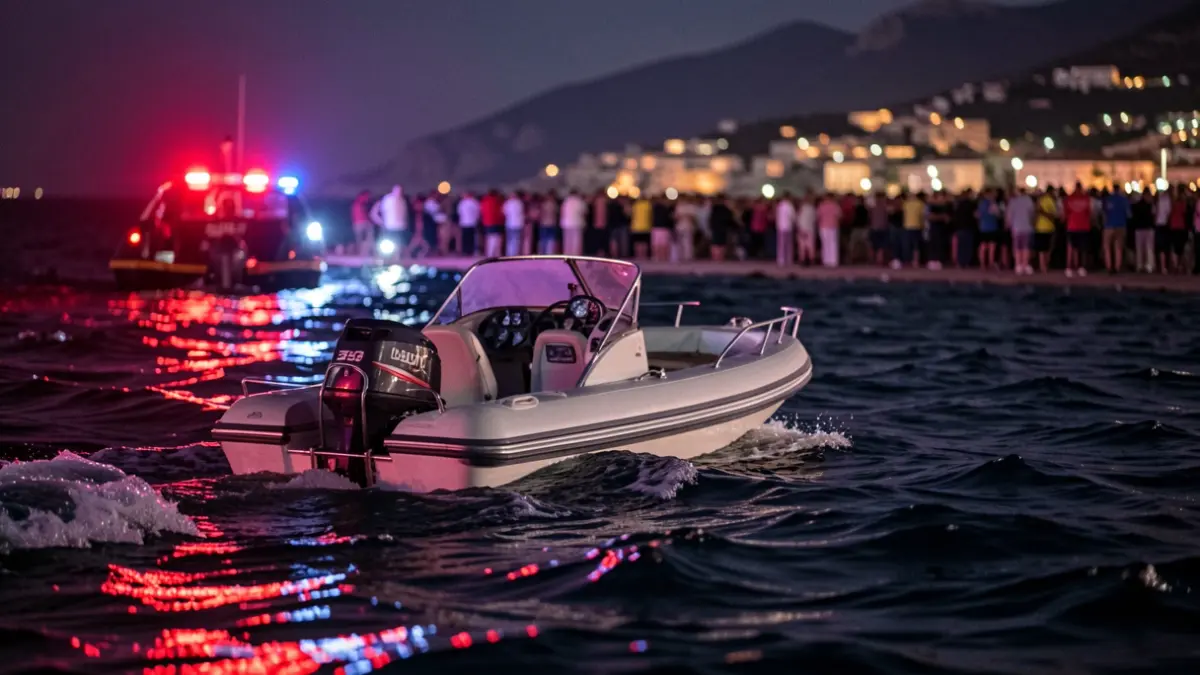
Narcolanchas have drastically reduced their presence on Tarragona's coasts, marking a significant shift in criminal organization operations. Years ago, the Tarragona coastline was a primary entry point for hashish into Europe, but mafias have now redirected their businesses towards cocaine and human trafficking, considered more profitable and less risky.
Captain David Herreras, head of the Judicial Police Unit of the Civil Guard in Tarragona, explains that the province is no longer attractive to many hashish-trafficking networks. Since early 2025, a decline in drug landings and vessel detections has been observed, a trend attributed to both years of police pressure and the transformation of the international drug market.
Police investigations between 2021 and 2024 hindered the establishment of these organizations, leading them to consider Tarragona a difficult territory. Historically, southern Catalonia was already used for tobacco smuggling and offered favorable conditions like extensive beaches and an orography that facilitates surveillance.
Cocaine, conversely, primarily arrives through other channels, such as maritime containers or cargo ships. Nevertheless, the line between these businesses is blurring, as cocaine packages have been detected in hashish shipments. Statistics reflect this evolution, with numerous hashish seizures between 2021 and 2023 on beaches like Waikiki, Riumar, La Móra, and Tossa de Mar, as well as operations by the Mossos d’Esquadra.
Police pressure has forced organizations to mobilize more infrastructure, including fuel, auxiliary boats, and surveillance, increasing exposure and facilitating police work. This complexity also requires recruiting more personnel, creating fragmented structures where the drug owner might be in North Africa while other cells handle the landing and transport.
The shift in the international drug market, with a decrease in cocaine prices due to overproduction, is a key factor. The 'reverse route' allows for the exchange of hashish for cocaine, making the latter a much more protected commodity. Losing a cocaine shipment represents a far greater financial loss than losing hashish, which has led to stricter security measures, including the use of long weapons for protection against police and rival gangs.
Some organizations now use modified vessels for human trafficking, a more profitable activity as payment is made before the journey. This mutation, coupled with the transition to cocaine, explains why the decrease in hashish landings does not necessarily imply a reduction in criminal activity, as the structures and logistics remain, now oriented towards new businesses.