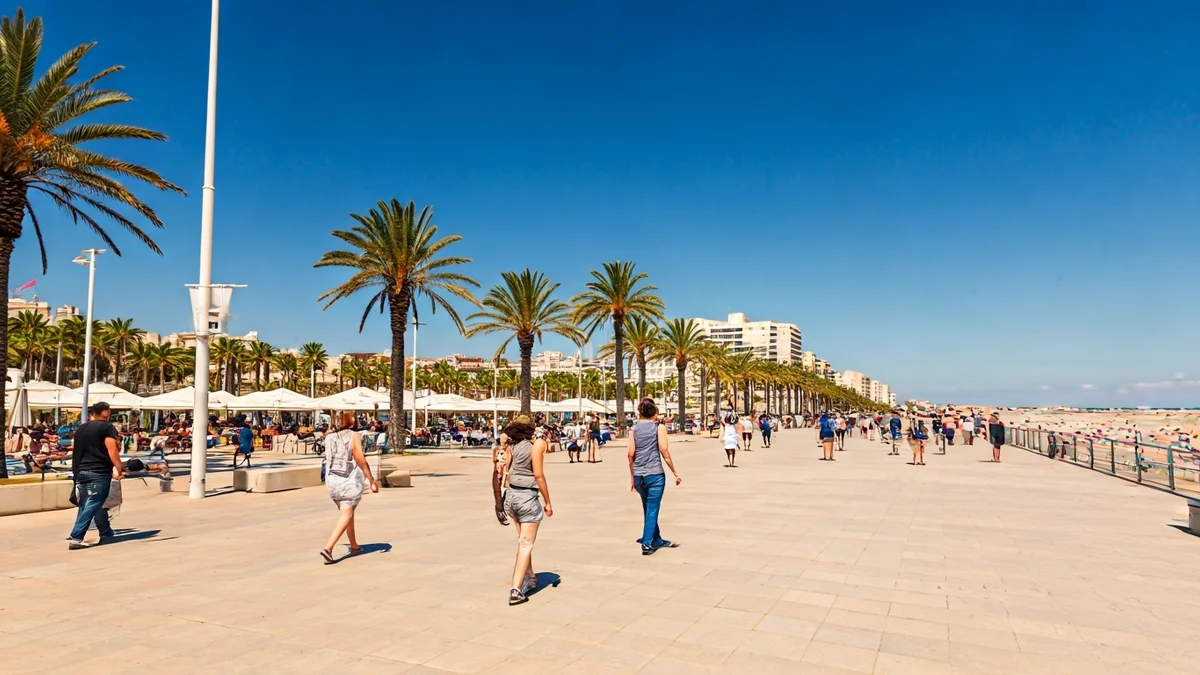
The capital of the Costa Daurada registers an average of 31,778 daily seasonal residents, a figure almost identical to its 30,442 permanent inhabitants. This means the actual population burden on the town typically doubles its registered residents, reaching 62,220 people.
This dynamic is not unique to Salou. Other municipalities in the Tarragona province also feature in Idescat's 'top 25' for seasonal population. These include Tarragona, Cambrils, Mont-roig del Camp, Calafell, El Vendrell, and Vila-seca, which ranks fifteenth. These key tourist destinations dominate the upper part of the classification.
“"To a large extent, when the seasonal population is so large in relation to the registered population, it normally responds to tourist flows."
Salou has maintained its second position since 2009, and before Barcelona surpassed it, led the Catalan ranking since 2002, when these records began to be collected. Only during 2020, the year of the pandemic and the most severe mobility restrictions, did it drop to sixth place.
Juan Antonio Duro, Professor of Economics at URV and an expert in Tourism Economics, emphasizes that this high seasonal population is primarily due to tourist flows. The highest values in Salou for 2024 were concentrated in the third quarter (from July to September), with an additional 72,335 people, and were also significant from March to May, with 39,231.
This statistic is crucial as it highlights the pressure on public service provision. Duro explains that municipalities receive funding based on their resident population, not the seasonal population they also need to serve. This creates additional needs in areas such as waste collection, security, and general public spending, forcing these municipalities to provide more services than usual.