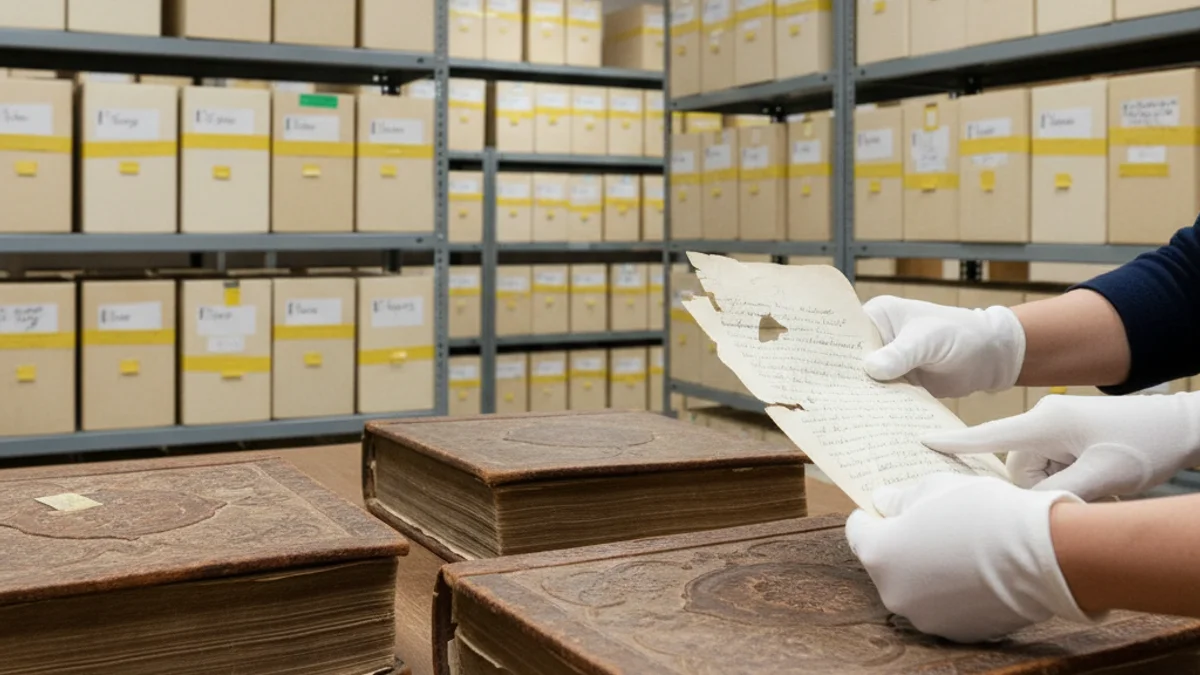
The documentary collection of the prisons and judicial districts of Tarragona, Reus, Tortosa, El Vendrell, and Montblanc spans from the late 19th century to the early 21st century. These 158 square meters of paper are, according to director Laia Lanceta, an essential resource for understanding the evolution of the penitentiary system and the contemporary history of the province of Tarragona.
The most voluminous and consulted series is that of inmate files, totaling 24,735 documents. This conservation and digitization work was completed late last year, funded by the Department of Culture of the Generalitat and Next Generation funds. Digitization is vital, as the documents are highly sought after by researchers, entities like the Democratic Memorial, and especially by families seeking to learn the stories of their predecessors.
“"We are fortunate that the collection has arrived very complete, despite the time and the transfers."
The collection allows for an understanding of the integral functioning of the prisons, including food purchase ledgers, staff registers, correspondence, visits, and minute books of disciplinary boards. The documentation also illustrates the extreme saturation of centers like the Praetorium (Torre de Pilats), which in September 1939 housed 1,026 prisoners, along with La Punxa and Les Oblates.
One of the most curious documents are the infirmary books from 1943, where diagnoses such as “gastritis” (treated with bicarbonate) or “hysterism” (treated with camphor bromide) were recorded, showing the harsh living conditions and medical treatments of the time for the inmates.