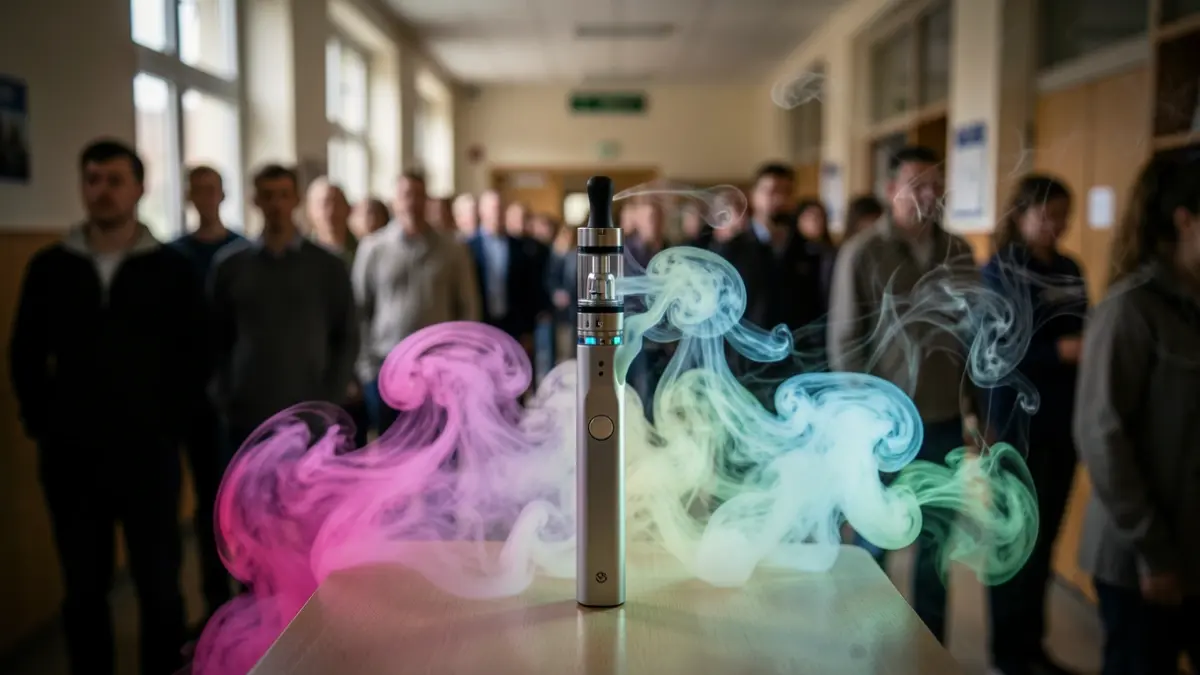
The new anti-smoking law, awaiting congressional approval, will equate products that imitate or are associated with smoking to conventional tobacco. This includes prohibiting their consumption by minors and regulating where smoking is not allowed.
In Tarragona, data from the annual anonymous survey conducted by the Department of Public Health among high school students reveals an alarming increase: e-cigarette use has risen from 4% in 2015 to 22.7% currently. This trend has prompted the advancement of prevention workshops targeting first and second-year ESO students (12 and 13 years old).
One of the main challenges identified is the low perception of risk among the public, especially young people. Although there is less data than for conventional cigarettes, it has been confirmed that the inhaled vapor contains heavy metals from the devices themselves. Furthermore, specific diseases like EVALI (lung injury associated with e-cigarette use) have been detected in young patients, such as a recent case of a 19-year-old at the Hospital Clínic.
The industry employs aggressive strategies to attract young consumers, featuring e-cigarettes decorated with popular characters and appealing flavors like strawberry, vanilla, or cookies. Specialists emphasize that starting with vaping, even without nicotine, increases the likelihood of smoking conventional tobacco by two to three times, as it automates the gesture and facilitates the transition.
Finally, it is highlighted that vaping also generates secondhand smoke and even thirdhand smoke, which adheres to surfaces, affecting those around the user.