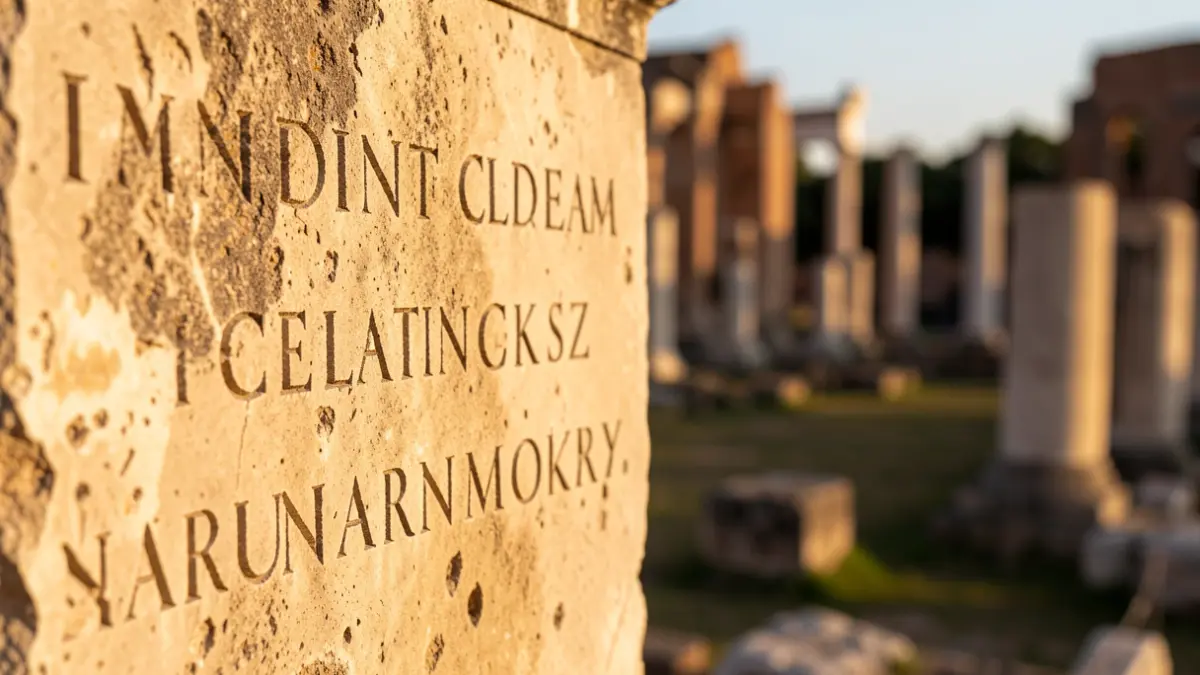
In Tarragona, the ICAC presented the educational workshop "The Secret Archive of Arabinus," an initiative inspired by escape rooms and storytelling. This resource, designed to bring the city's epigraphic heritage closer to young people and adults, invites participants to interpret real Roman inscriptions found in the streets of the upper town. The workshop is the result of epigraphy internships carried out by six students from the Rovira i Virgili University (URV) as part of the "Romans of Stone and Letter" project.
The proposal aims to integrate Roman epigraphy into Tarragona's Roman heritage outreach routes, creating a new access point to ancient inscriptions and strengthening the connection between archaeological research and the public. The workshop was presented on September 25th at Plaça Corsini, as part of the European Research Night's Science Workshop Fair.
Meanwhile, in Reus, ICAC researcher Marina Daniel gave the talk "Seeds that Explain Landscapes" on September 21st at the Castell del Cambrer. The session highlighted how the study of plant remains, such as seeds and fruits, provides valuable information about the interactions between past human societies and their environment.
These archaeobotanical findings allow for the analysis of aspects like trade, economy, and landscape transformation, and even offer insights into cultural and identity issues, turning plant remains into witnesses of daily life and special events.