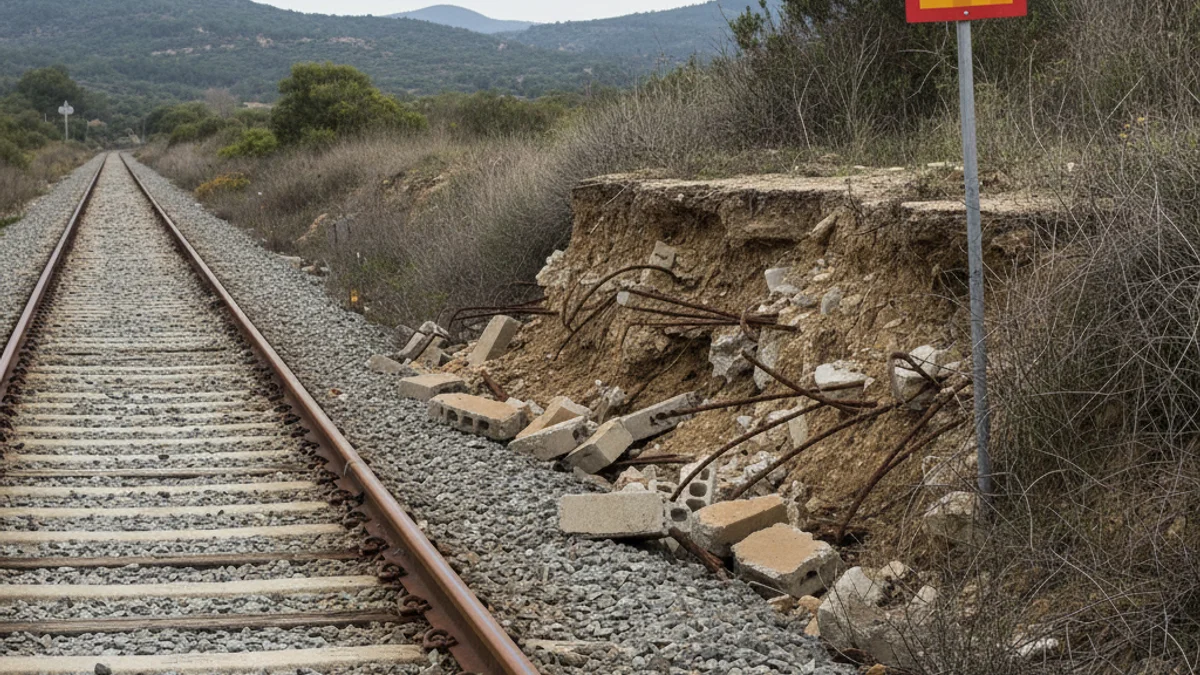
The increase in speed restrictions imposed by Adif on the Catalan railway network has been significant since October 2018, when 90 affected sections were recorded, totaling 78.8 kilometers. Currently, this figure has risen to 179 restricted points, jointly totaling 130 kilometers of track with limited circulation. These measures, caused by infrastructure deficiencies, such as the condition of embankments, directly impact journey times.
By province, the most significant increase has occurred in Tarragona, which has gone from 19 to 57 affected sections in seven and a half years. Barcelona has also experienced a sharp rise, from 42 to 86, while Girona has doubled its incidents, from 14 to 28. Only the province of Lleida has managed to reduce its limitations, decreasing from 15 to 8.
The Regional line currently facing the most deficiencies is the R15, especially the stretch between Riba-roja d'Ebre and Reus, where there are seventeen sections with limitations. Furthermore, historical restrictions remain; for instance, a section in Raimat (Segrià) has been in force since February 20, 2005, due to embankment deficiencies, and the maximum permitted speed has dropped from 80 km/h to just 30 km/h.
These limitations not only increase travel times but also create serious operational problems for the railway operator. When a train must circulate more slowly, delays accumulate, affecting the scheduling of subsequent services and, in some cases, forcing the operator to find additional drivers to cover the delayed routes.