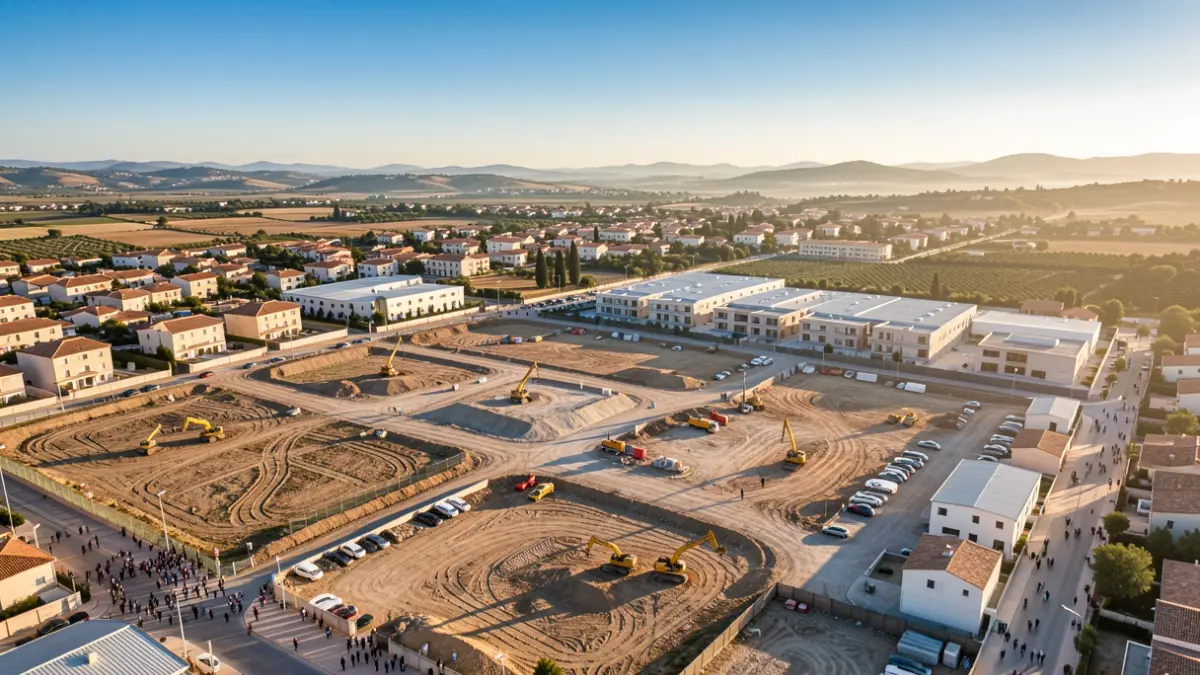
The Bellpuig municipal council has unanimously given the green light to the partial urban development plan for sector PPU-13. This initial approval is a fundamental step for the development of a new industrial area that includes two plots with a combined area of approximately 46,000 square meters.
The land, owned by the developers, is located next to the N-II highway, near Fargues Monfort, and at the access to the municipality from Tàrrega. The objective is to equip this space with the necessary urban services to convert it into industrial land suitable for new companies or expansions.
Mayor Jordi Estiarte has expressed his satisfaction with this progress, highlighting the need for available industrial land to foster economic activity in the municipality.
Following the initial approval, the file will continue its processing at the Urban Planning Department before final validation.
The council also approved amendments to the civic ordinance. One of the new measures establishes that children under 12 years old must be accompanied by an adult to access municipal facilities, a measure justified by the detection of risk situations. Sanctions have also been introduced for very serious infractions, such as active or passive resistance to municipal workers, following some incidents.
Additionally, obligations are imposed on building owners to ensure effective closures that prevent the entry of pigeons and other animals, aiming to prevent sanitation problems. According to the mayor, over 90% of pest hotspots are related to properties without adequate closures, particularly those owned by real estate agencies and banking entities.