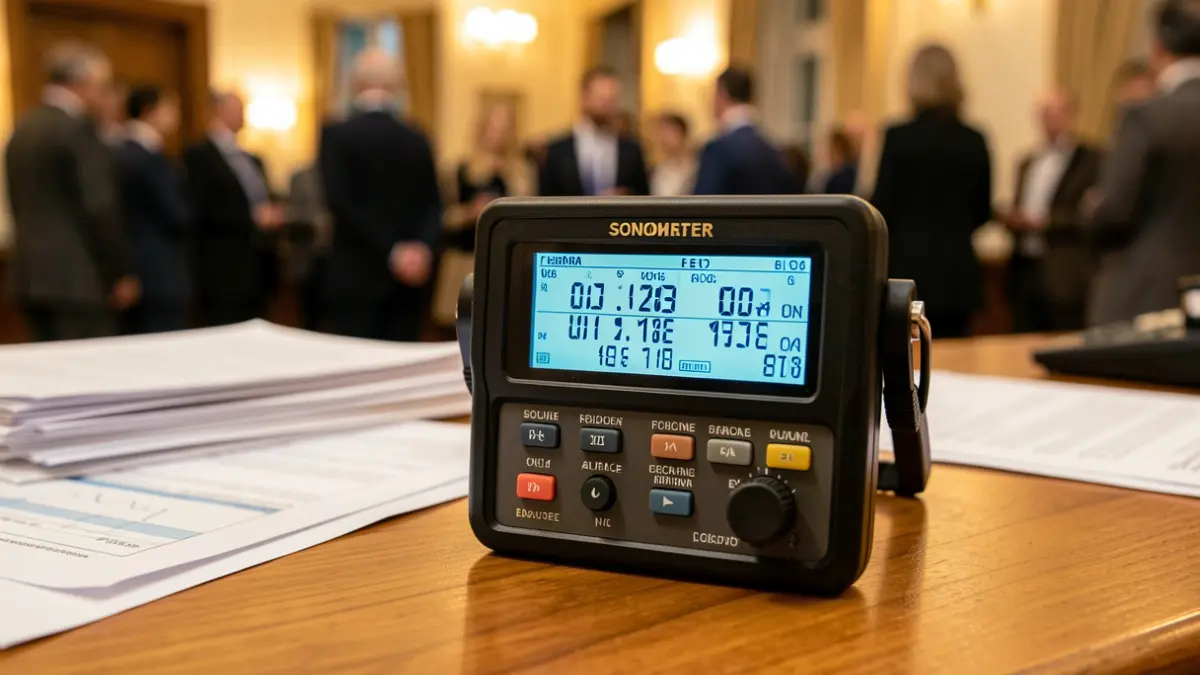
The La Seu d’Urgell City Council has made a significant acquisition to combat noise pollution: a state-of-the-art professional sound meter. This device allows for immediate sound level measurement with full legal validity, which will be crucial in cases of lawsuits or sanctions. The management of this equipment will be shared between the Municipal Police and the technical services of Urban Planning and Environment.
The chosen model is the CESVA SC420, a high-tech device manufactured by a renowned Catalan company in the acoustics sector. The council's investment amounts to 5,299.80 euros (VAT included). The council emphasizes that this purchase represents a "firm step forward in protecting public health and improving citizen coexistence," granting the municipality full autonomy in managing this issue.
Previously, the City Council relied on external companies or supramunicipal services for complex inspections or official measurements. With the new equipment, the local administration can act immediately on any incident or complaint, as noise is considered a pollutant that directly affects mental health, increases stress, and disrupts sleep.
The mayor of La Seu, Joan Barrera, highlighted that the expenditure of over 5,200 euros should be viewed not as a cost, but as a "socialized investment" that translates into "well-being and quality of life" for the residents.
The CESVA SC420 is certified as Class 1, the highest precision range recognized by current regulations, ensuring the legal validity of measurements as irrefutable scientific evidence. This feature protects residents' right to rest and the legal security of establishments.
Additionally, the device offers technological features such as audio recording and voice notes. Beyond measuring decibels, it records actual audio, allowing technicians to identify the source of noise (music, vehicles, shouting). It is designed for outdoor use and continuous measurement campaigns, with a robust system that automatically restarts after power outages.
The device will be primarily used in four areas: control of nightlife (terraces, bars, clubs), mediation of neighbor complaints (domestic noise), measurement of ambient noise (traffic, machinery) to design more peaceful urban areas, and control of noise from industry near residential zones.