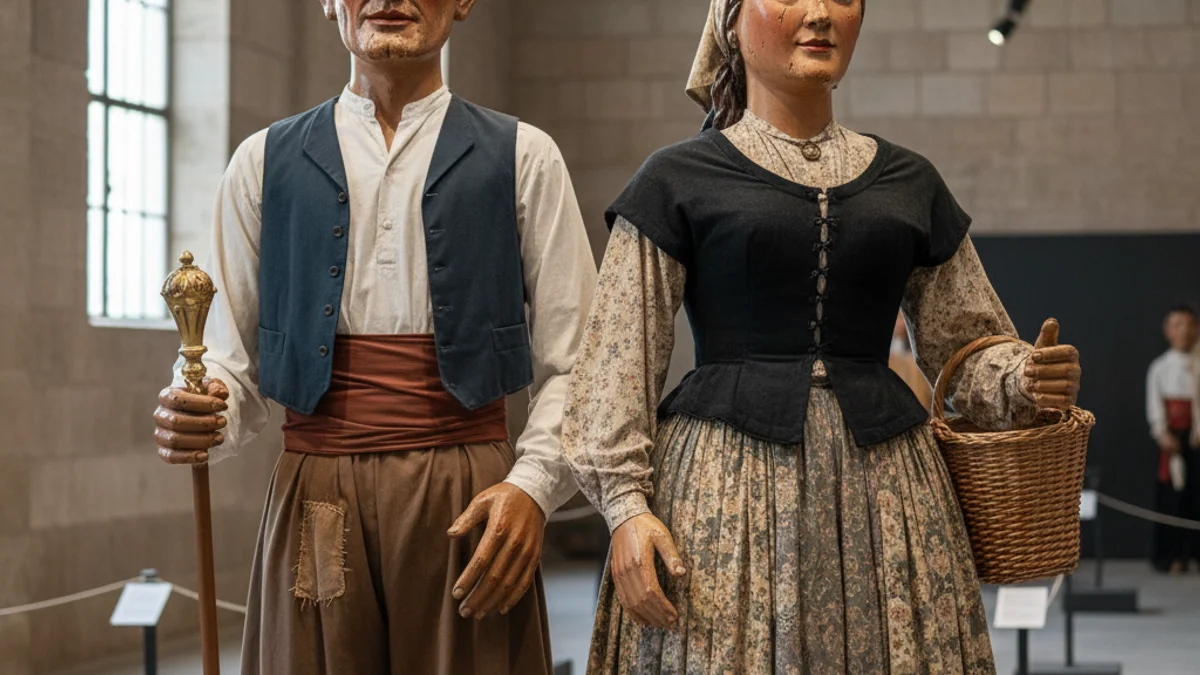
The 'gegantera' tradition in Tàrrega has added a new chapter thanks to the work of Robert Sambola Pastó, who has recovered two figures from the 19th century. These pieces, known as el Llenguado (The Ling) and la Pagesa (The Peasant Woman), were part of the old processions of the Carme neighborhood and had disappeared around 1870. The project, titled La recuperació dels gegants de Cal Terés, was presented on Friday at the Ateneu de Tàrrega.
“"The giants and the festive imaginary of Tàrrega have always fascinated me; since I was little, I have been linked to the Colla Gegantera de Verdú and Guixanet de Tàrrega."
The original giants were created between 1810 and 1840 by Marià Terés, a notary and amateur sculptor. Sambola had to create a reinterpretation, as only three old press articles (such as La Signou from 1915) and a brief physical description existed. To ensure historical fidelity, he contacted experts like Lluís Ardèvol, author of the Catàleg de Gegants Centenaris de Catalunya, and studied 19th-century Catalan imagery.
The artisanal process was carried out in his grandparents' workshop in Verdú, using traditional materials like clay, plaster, and papier-mâché. El Llenguado wears dark tones and carries a book with the plans of the Canal d’Urgell from 1853, in addition to sticking out his tongue. La Pagesa embodies the peasant woman of Tàrrega with a skirt and a scarf embroidered with the Carme coat of arms, both figures faithful to the aesthetic canons of the era.
The final goal of the project is for the Cal Terés giants to once again participate in the Carme neighborhood festivities, even recovering their traditional dance. Sambola, who plans to study Restoration and Conservation, aspires to dedicate himself professionally to the preservation of festive heritage.