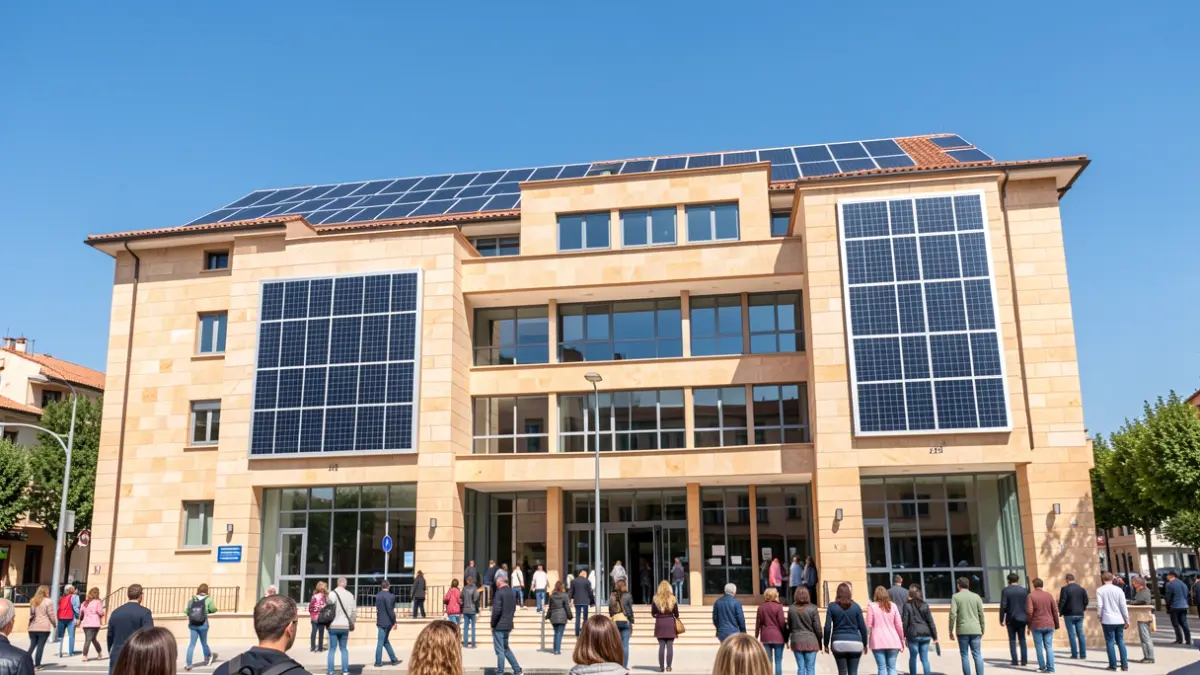
The renovation works on the four facades of the MútuaTerrassa University Hospital (HUMT) have concluded, giving the healthcare center a new look and improving its energy efficiency. This project, initiated in February 2025, aimed to enhance the comfort of patients, families, and staff, and align with the entity's climate action plan.
The inauguration ceremony, held at the Teatre Principal in Terrassa, was attended by dignitaries including Josep Rull, President of the Parliament of Catalonia; Candela Calle, manager of the Metropolitan North Health Region; Jordi Ballart, Mayor of Terrassa; and Antoni Abad, president of MútuaTerrassa. Following a technical explanation of the works by Pau Durant, Cristina Serra, and Anna Cabasés, the original facade stone was unveiled.
During the event, Josep Rull highlighted MútuaTerrassa's green commitment, stating the new facade sends a "very powerful message" regarding the fight against climate change. Antoni Abad emphasized the installation of photovoltaic panels as a "clear message of green commitment" and celebrated the project's completion coinciding with the institution's 125th anniversary. Jordi Ballart described the day as "historic" for Terrassa and Catalonia, underscoring public-private cooperation. Candela Calle noted the importance of healthcare system sustainability and how the building's new environment supports patients.
The refurbishment involved removing 180 tons of stone cladding and installing rock wool for improved thermal insulation. Approximately 3,500 m² of rock wool and 3,000 m² of rock wool sandwich panels were used, increasing the facade's insulation by 12 cm. Obsolete shutter boxes were replaced with 400 curtains for room darkening. Additionally, 2,700 m² of photovoltaic panels were installed on the South, West, and East facades, projected to generate between 10% and 15% of the building's energy consumption.