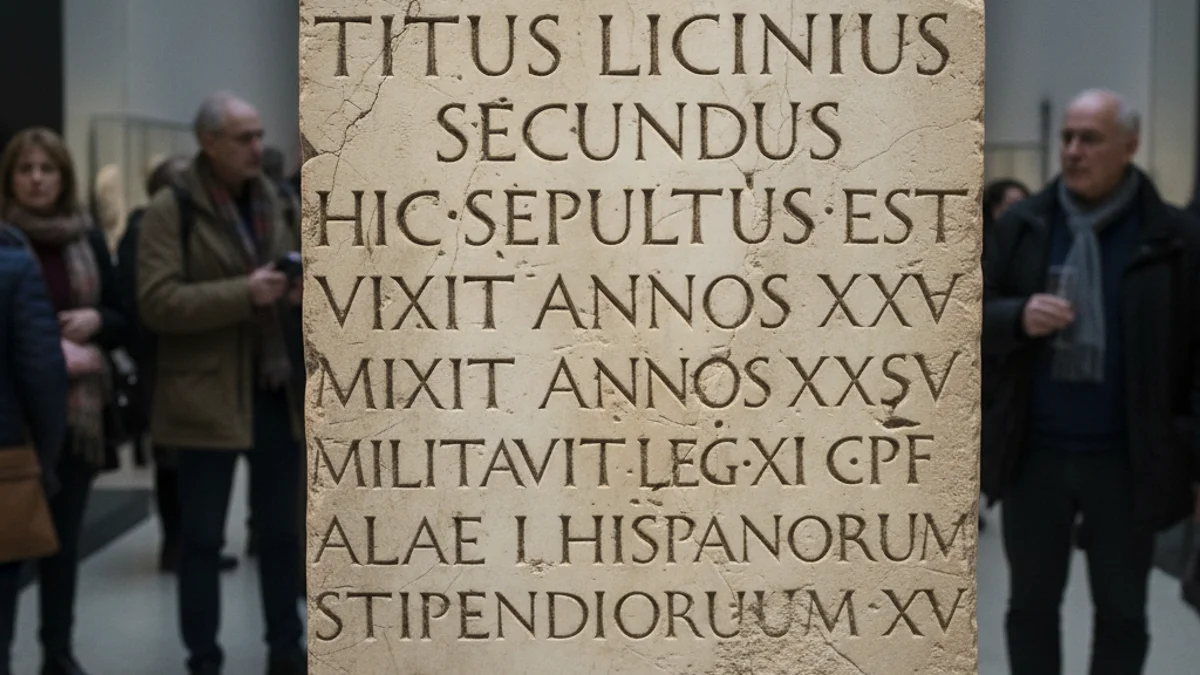
The monument was dedicated by Pòrcia Serana to her son, Lucius Porcius Nepos, who passed away at the age of 27. The original artifact is currently held at the Archaeology Museum of Catalonia, with a reproduction available at the Rubí Museum.
“"Lucius Porcius Nepos lies here, aged 27. Pòrcia Serana, daughter of Lucius, his mother."
Research suggests that Pòrcia Serana was likely of indigenous Iberian descent. As a widow in the Roman world, she would have inherited her husband's estate, including the lands at Ca n'Oriol, becoming a significant local landowner.
The Porcius family was deeply involved in the wine industry. During this era, the Laietania region was a major hub for viticulture, exporting wine across the western territories of the Roman Empire.