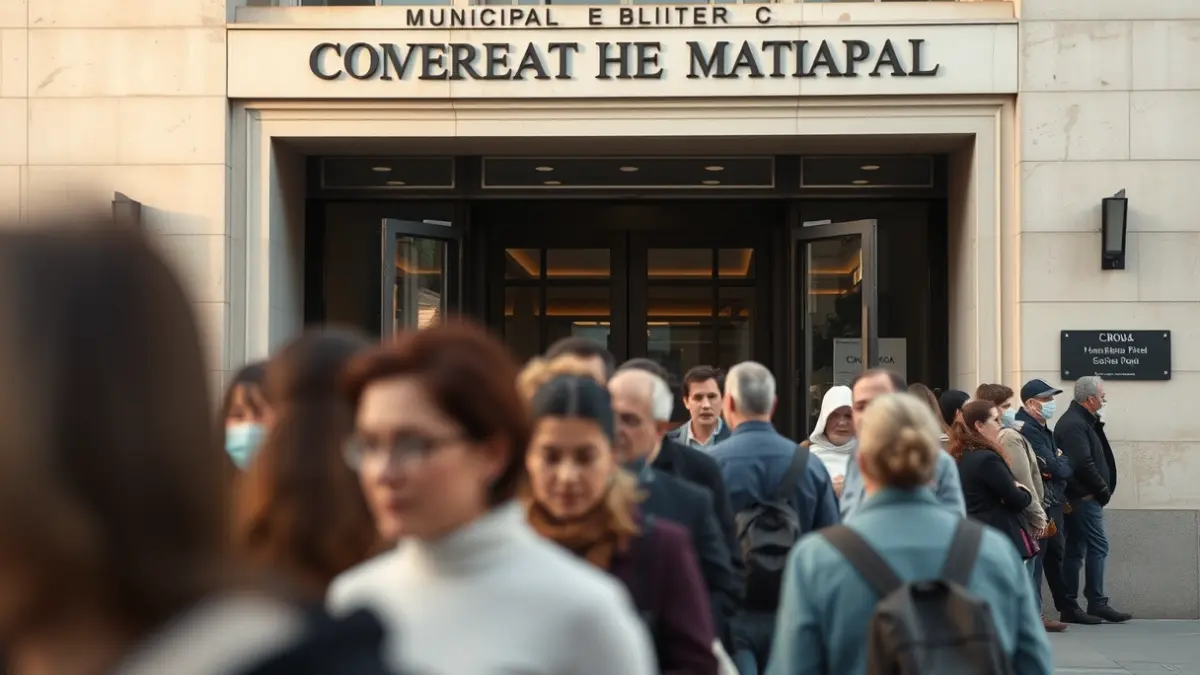
The extraordinary migrant regularization process, which began on April 20 and will last until June 30, has led to a large influx of people at citizen service offices. These queues are primarily for requesting the vulnerability certificate, a prerequisite for many of the procedures.
To qualify for this regularization, applicants must have arrived in Spain before January 1, 2026, and prove continuous residency for at least five months, without a criminal record. Additionally, they must demonstrate having worked, having a family unit with minors or dependents, or being in a situation of social vulnerability.
The vulnerability certificate, created specifically for this process, is issued by social services or accredited entities and serves to attest to social isolation, lack of support network, homelessness, insufficient income, having minors or dependents, or being exposed to exploitation or abuse.
The Sabadell City Council has reinforced its teams and extended the hours of the Despatx Lluch, on Indústria Street, to manage the increase in demand. Three differentiated queues have been established: for people with prior appointments, without prior appointments, and for documentation inquiries. Four other Citizen Service offices (Ca n'Oriac, Can Rull, La Creu de Barberà, and Torre-romeu) continue to attend by appointment during regular hours.
Required documentation includes the application, certified copy of the passport, proof of arrival and stay in Spain, and criminal record certificates from the country of origin and countries of residence for the last five years. Applications are submitted at Social Security offices or authorized post offices, and the process is free, although intermediaries charging for management have emerged.
The Spanish Government estimates that half a million people will regularize their situation in the country, while Funcas raises the figure to 840,000 people in an irregular situation in Spain as of January 1. In Sabadell, it is estimated that about 7,000 registered individuals could benefit from this regularization. This process does not imply naturalization or a permanent residence permit, but rather a provisional residence and work authorization which, once the file is resolved, will be valid for one year (five years for families with minors).