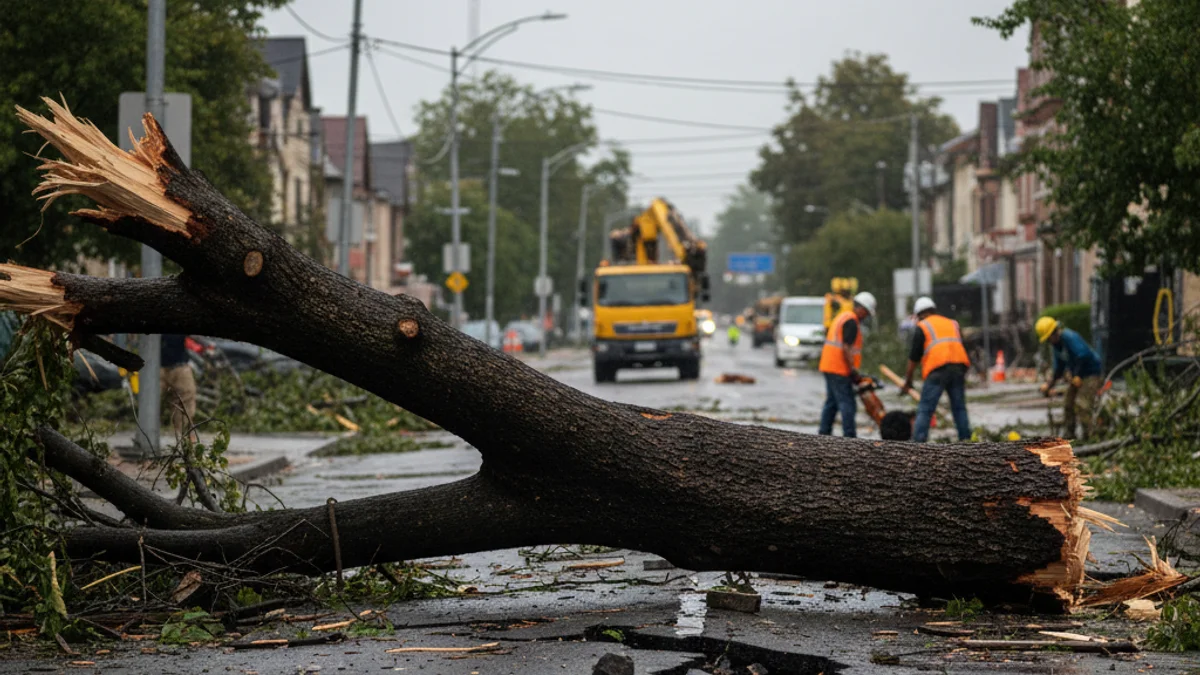
The falls of trees and lampposts in Sabadell during recent weeks, such as the large tree on Juli Garreta street this Monday, have reopened the debate on urban safety in the face of increasing intense weather phenomena.
These events follow previous incidents, such as the lamppost fall on Passeig de la Plaça Major last December, which injured a neighbor, or the pine tree that fell near the Torre de l'Aigua on January 18, highlighting the vulnerability of urban infrastructure and trees.
“"We must go to the root of the problem and stop designing with criteria from the past."
Bioconstruction expert Miquel Puig, from the Platform of Entities for Sustainable Urbanism (PEUS), advocates for building “resilient” cities capable of absorbing water and reducing wind impact. The key, according to Puig, is to stop waterproofing urban soil and implement sustainable drainage systems.
Regarding the trees, Puig notes that “an isolated tree is much more vulnerable to wind than a diverse and well-planned group.” The Sabadell City Council, through municipal sources, has assured that systematic preventive inspections of lampposts are carried out, along with continuous maintenance of green areas.