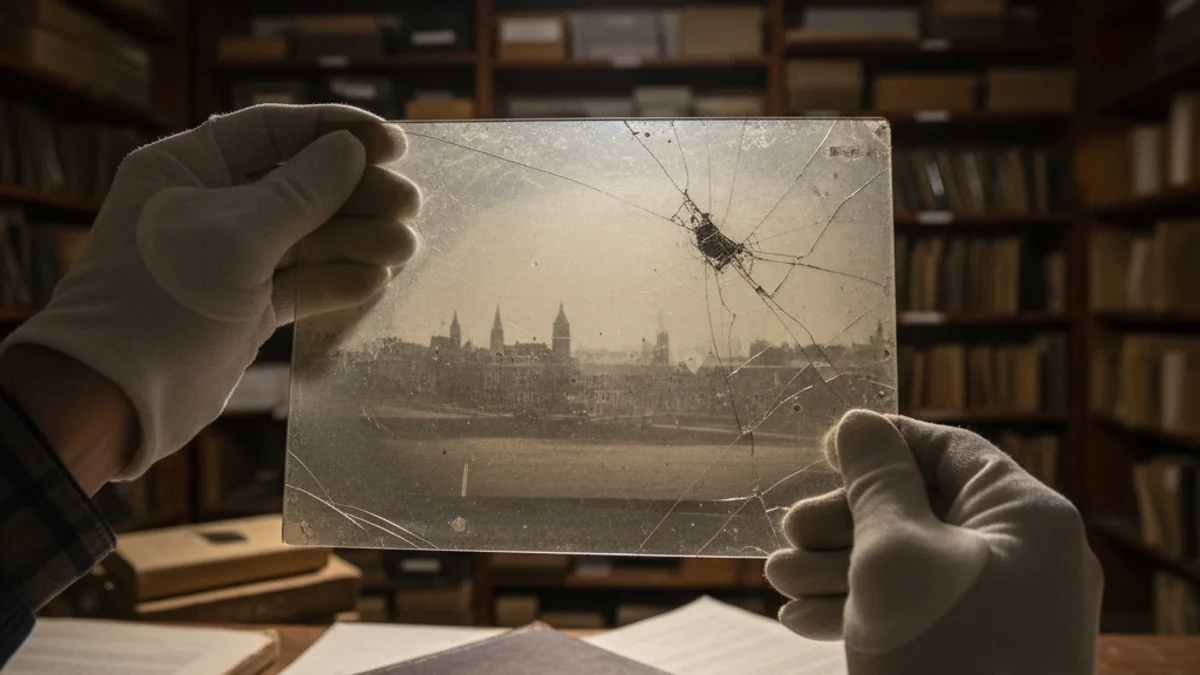
Pere Xercavins (1897-1964), owner of the Can Xercavins farmhouse and an amateur photographer, captured family scenes, festivals, and buildings in Rubí during the first half of the last century. His work stands out for its high technical quality and documentary value.
The archive, safeguarded by the family, contains a total of 842 glass plates, 100 of which are stereoscopic, covering a chronological span from 1914 to 1950. This collection of images is considered an invaluable source for local history.
To disseminate this legacy, several publications have been produced, including the book Rubí (1914 – 1950). Visió fotogràfica d’en Pere Xercavins (2007). More recently, Enric Escofet, the photographer's grandson, published Rubí desaparegut, which includes many images from the Xercavins Archive.
In addition to the publications, the Centre d’Estudis Rubinencs organized a talk in March 2024 where Enric Escofet and his father shared the history and a large part of the photographs. The Xercavins Archive, along with the collections of Ignasi Marroyo and Josep Maria Roset, is an essential graphic tool for understanding Rubí in the last century.