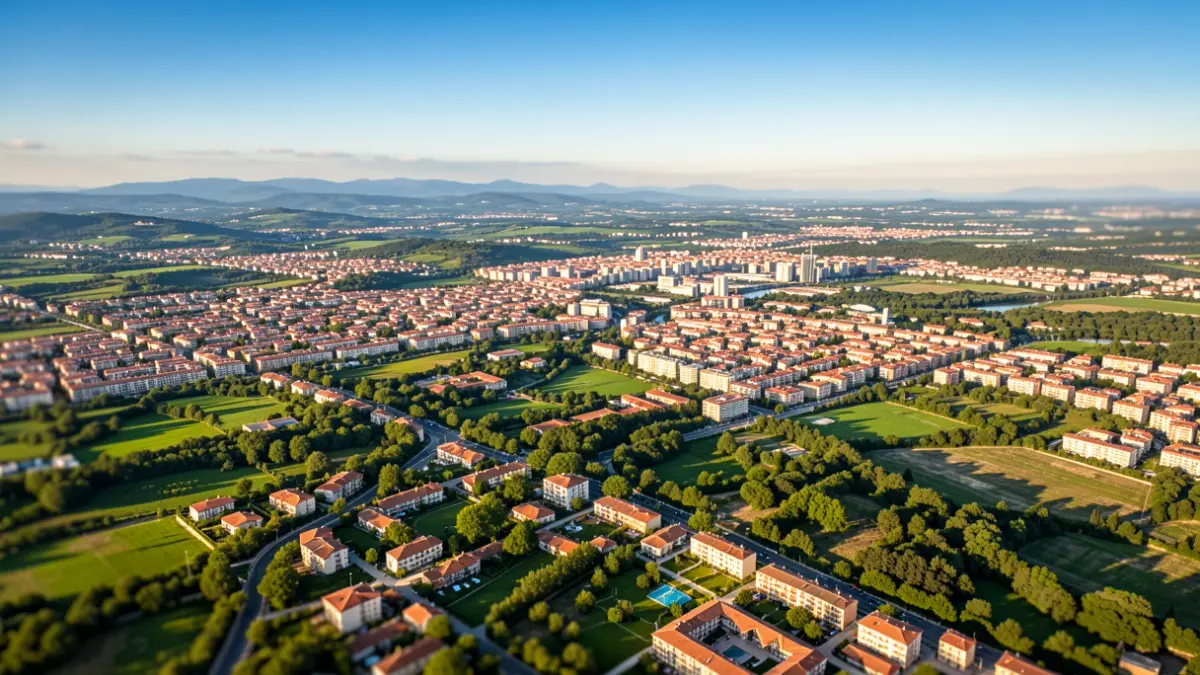
The Observatori del Consell Comarcal (Regional Council's Observatory) has released a new edition of its annual report on the population of Vallès Occidental. The study analyzes the recent demographic evolution, characteristics, and main growth factors of the region. The findings indicate that Vallès Occidental continues to gain inhabitants, albeit at a slower pace than Catalonia as a whole, within a context marked by an aging population, declining fertility, and the growing impact of migration.
As of January 1, 2025, the region had 970,228 inhabitants, an increase of 10,195 people compared to the previous year, representing a growth of 1.1%. This rate is slightly lower than the Catalan average, which grew by 1.4%. Over the last five years, Vallès Occidental's growth rate has also remained below that of the country.
The territorial distribution of the population shows a high concentration in the largest municipalities. Terrassa and Sabadell account for 47.1% of the regional population. When adding Sant Cugat del Vallès, Rubí, and Cerdanyola del Vallès, the five most populous municipalities concentrate nearly 72% of the residents. The region also exhibits significant differences in density and urban structure between highly urbanized areas and smaller, less dense ones.
The report confirms a progressive demographic aging process. The population aged 65 and over represents 18.3% of the total, while 66.1% are of active working age, and 15.6% are under 16 years old. Despite this trend, Vallès Occidental maintains a relatively younger structure than Catalonia overall, with an aging index of 117.2 elderly individuals per 100 minors under 16, lower than Catalonia's value of 136.9.
Migration plays a significant role in the region's demographic transformation. In 2025, one in three residents was born outside Catalonia (14.6% from other autonomous communities and 19.1% from abroad). The proportion of the foreign-born population, despite recent increases, is below the Catalan average (25.1%) and that of Barcelonès (34.1%), being similar to neighboring regions like Maresme or Baix Llobregat.
Regarding nationality, there are 128,586 foreign nationals (13.3% of the total population). The largest group comes from South America (30.3%), followed by Africa (26.6%). There are also residents from European Union countries (15.7%) and other European nations (5.8%), as well as from North and Central America (10.6%) and Asia and Oceania (11%).
Migration is the primary driver of the region's demographic growth. Natural increase recorded a negative balance of 622 people in 2024 (6,399 births and 7,021 deaths). In contrast, the migratory balance remained clearly positive, with a net gain of 10,501 people during the same year.