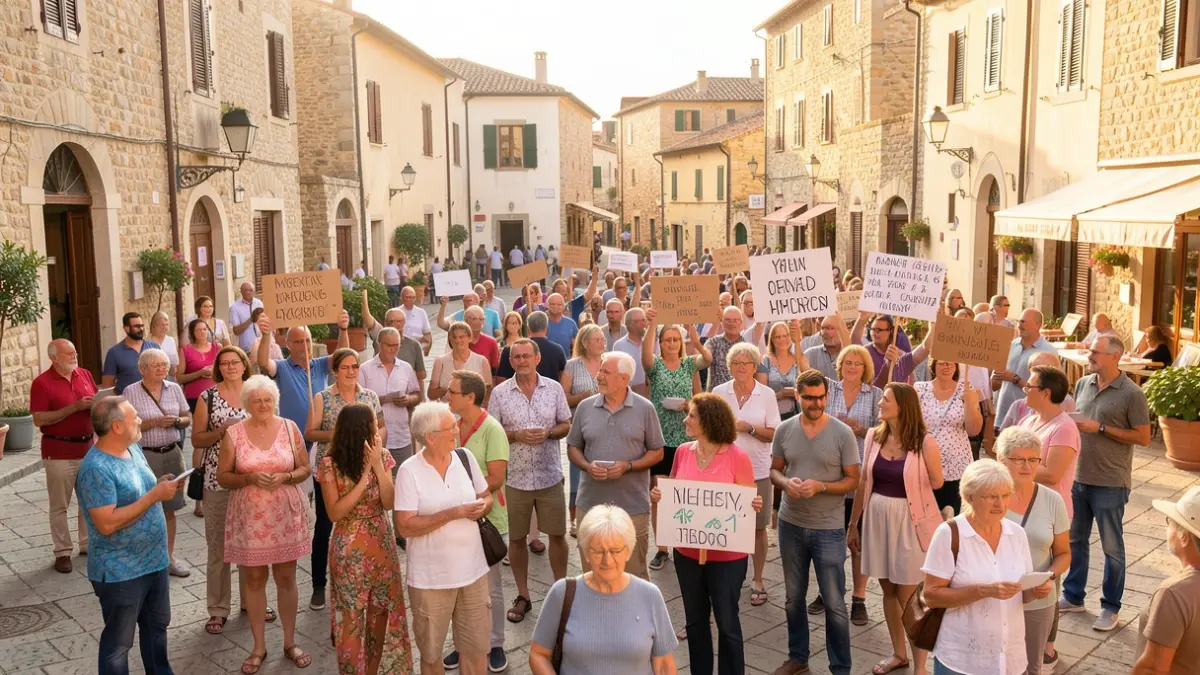
The closing ceremony marked the end of the second phase of this project, which began in 2023 and brought together various entities, cooperatives, and initiatives arising from the Social Economy of Terrassa. During the event, representatives of the involved agents presented the work done and emphasized the need to maintain a common network to gain visibility. The event also included the creation of a live impact mural by the young artists of A Cau de Mur and l’Hawma.
Over four years, the driving entities –Synusia, Prodis, Communia, Adhoc, and El Corralito– have worked to strengthen the associative socioeconomic fabric of Terrassa. They have promoted diverse projects, from Districte Zero to the Language School, counting on the direct participation of other actors such as L’Egarenca and La Terrassenca, and the collaboration of Ateneu Candela, La Natural, and the neighborhood association of Sant Pere.
“"We make a very positive assessment of these four years. We have had a fantastic response, reinforcing networks born from the citizens themselves that already existed and accompanying new ones, giving them the confidence to develop their projects."
This collaboration has led to consolidated initiatives such as the energy community of La Llançadora, the Library of Things and Utensil, the Outdoor Gatherings in the neighborhoods of Egara and Sant Pere, the Prodis Steam Market, and the El Corralito Artists and Artisans Market. The promoters summarize the work done across three axes: social and solidarity economy, culture, and neighborhood fabric, estimating that the Comunalitat has reached a minimum of 7,000 people directly.
Despite the closure, the organizers are already working to apply for the third call for Urban Communities (Comunalitats Urbanes), dependent on the Department of Labor of the Generalitat de Catalunya, with the intention of continuing the activity for two more years. This new stage will focus on reinforcing the training network and the employment network. The new call will open on February 16, and the promoters are seeking new city entities to join.