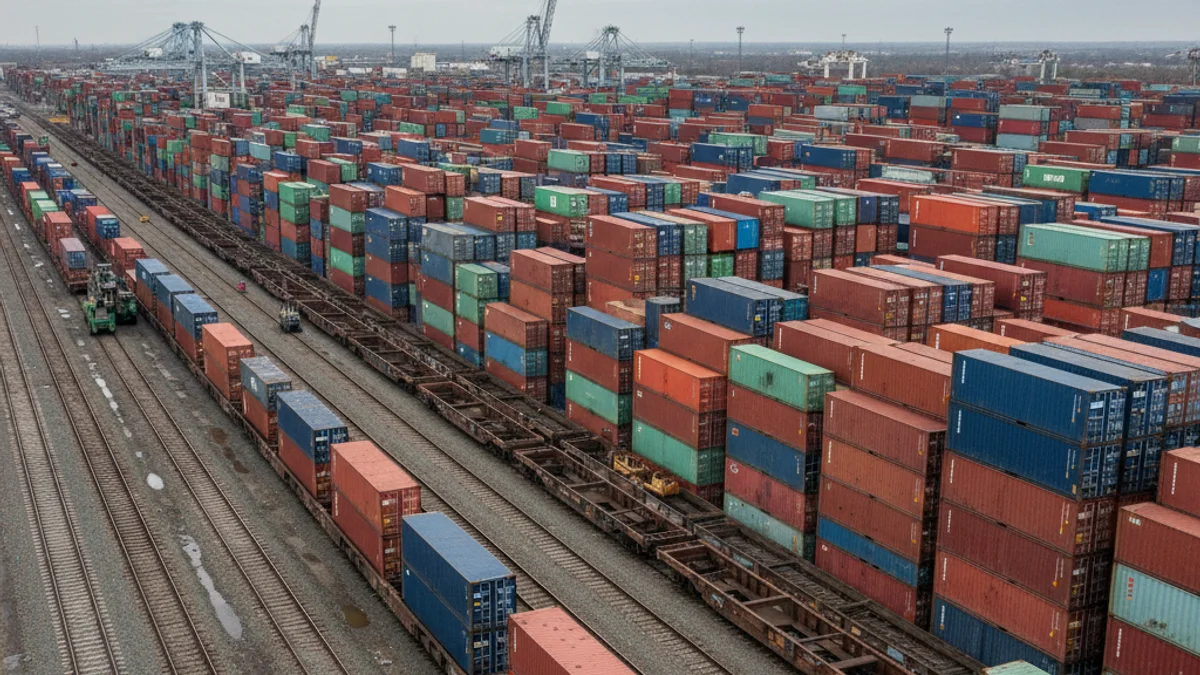
The freight bottleneck worsened with the closure of the R8 tunnel in Rubí, leaving the La Llagosta terminal (Vallès Oriental) as the only international gauge exit point. This terminal, inaugurated on January 5, operates at only 30% capacity, insufficient to manage the container backlog.
“"The big issue is not today's costs, but the loss of tomorrow's opportunities."
Quantified economic losses include the 9 million euros calculated by Pimec during the days of maximum chaos. Furthermore, the General Association of Transport Operators of Catalonia (AGTC) estimates daily losses of 2 million euros for road transport, affected by the closure of the AP-7 in Martorell and increased traffic.
Beyond monetary costs, Daniel Albalate (University of Barcelona) points out the labor costs associated with the low productivity of the 400,000 daily Rodalies users. Josep Reyner warns that unreliability may cause companies to reconsider hiring workers who depend on the train, reducing competitiveness.
Both experts agree that if the situation becomes chronic, it could directly affect business investments and the GDP. The solution, according to Reyner, involves “investing, investing, and investing” and clarifying the governance of the service, as there has been no significant investment in the Rodalies infrastructure since the 1990s.