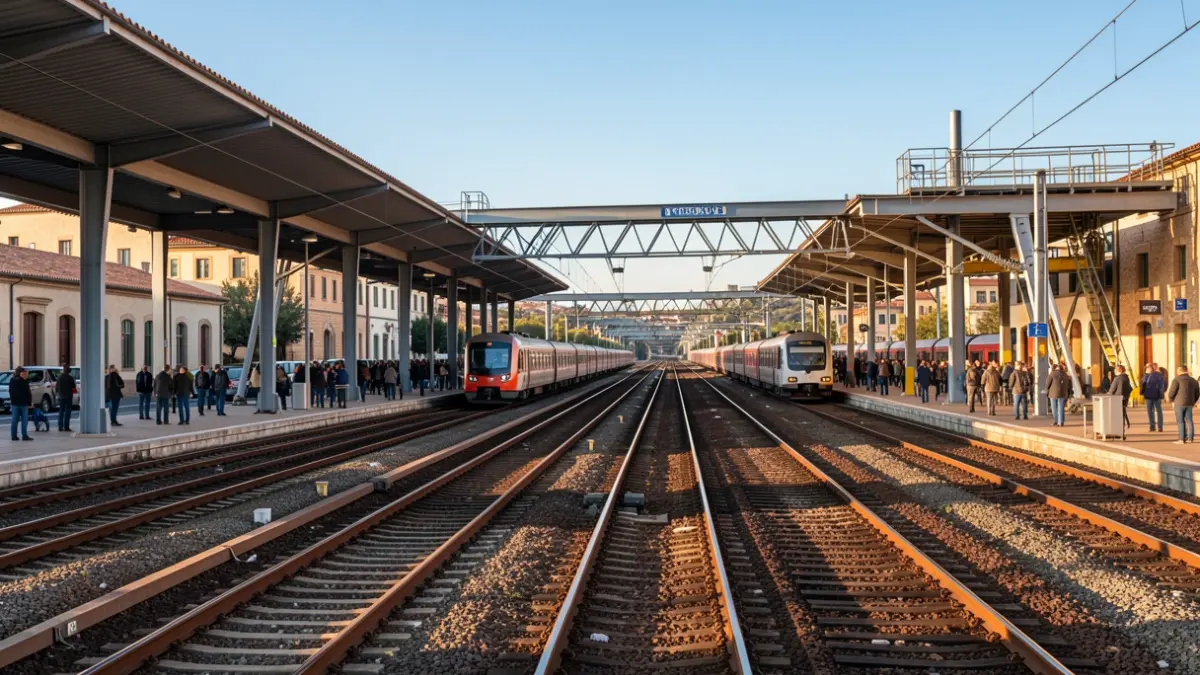
This forecast was detailed by the Secretary of State for Transport and Sustainable Mobility, José Antonio Santano, during a visit to the works at the Granollers-Canovelles station. Santano indicated that, once the works are finished in February, the service launch should not take too long, although he did not specify the time needed for pre-service tests with driverless trains. The works are on schedule, although the secretary of state recalled that "incidents must always be taken into account".
Since the beginning of the year, the R3 line has suffered 63 copper cable thefts and five vandalism reports, incidents that have affected service. To address these thefts, the Spanish government has processed an emergency contract of 17 million euros to purchase cable and has reinforced security measures.
Additionally, work is underway to repair the wall of the Montcada cement factory that collapsed earlier this year, as well as the renovation of the Montcada Bifurcació station, with an investment of 49 million euros, works that will be completed in December.
The construction works for the double track, which include new track, electrification, station renovations, and improvements in accessibility and capacity, are "progressing well," according to Santano. A notable improvement will be the elimination of several level crossings, significantly increasing service safety.
The Minister of Territory, Sílvia Paneque, highlighted the efforts of the Generalitat Government to minimize disruptions during interruptions. Before the service cut, the R3 transported approximately 25,000 passengers daily. Currently, the alternative road service has transported 2.5 million passengers since last October.