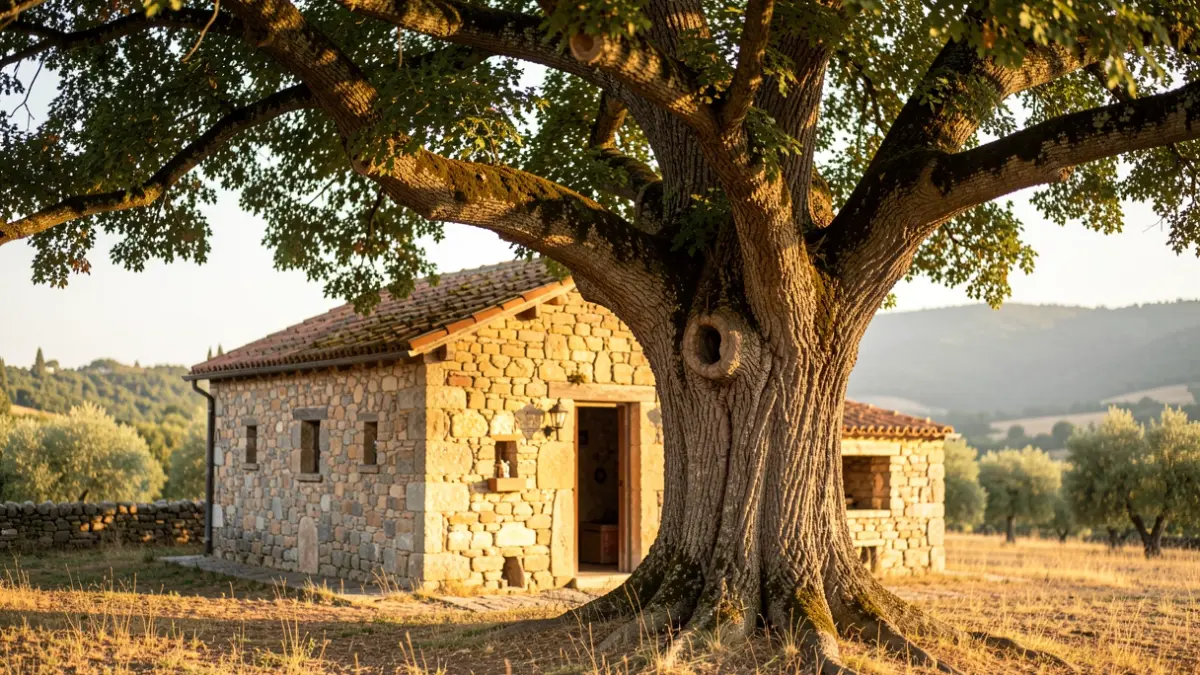
Many years ago, the city of Valls suffered numerous epidemics, leading its inhabitants to seek refuge in the Boscos area, a place considered miraculous for its pure air and its springs with supposedly healing waters. This location attracted Christian hermits seeking a life of penance and contemplation, and it was then that the people of Valls decided to build a hermitage dedicated to Sant Llorenç.
Over time, the Boscos area became a summer retreat for the most affluent families in Valls, who built houses and farmhouses there to enjoy the tranquility and find refuge during times of illness or war. In front of the hermitage grew a giant linden tree, which according to popular tradition was born from a sapling of the same tree where the Mare de Déu del Lledó appeared.
The festivals of Sant Llorenç were an important event in Valls. It was customary to offer prayers and make vows before the linden tree, recite the rosary, sing hymns, and eat the traditional 'coques' of Valls. Devotees brought candles and ex-votos as offerings to the saint. During these celebrations, the city of Valls was practically deserted, as everyone gathered at the hermitage, on foot or by cart.
The eve of the festival was announced with music through the streets of Valls, accompanied by girls dressed in white carrying trays of sugared 'coques'. In the evening, the residents of Picamoixons arrived, leading to the anticipated 'ball de Coques' (dance of the 'coques'), presided over by the Gigantó Robafaves.