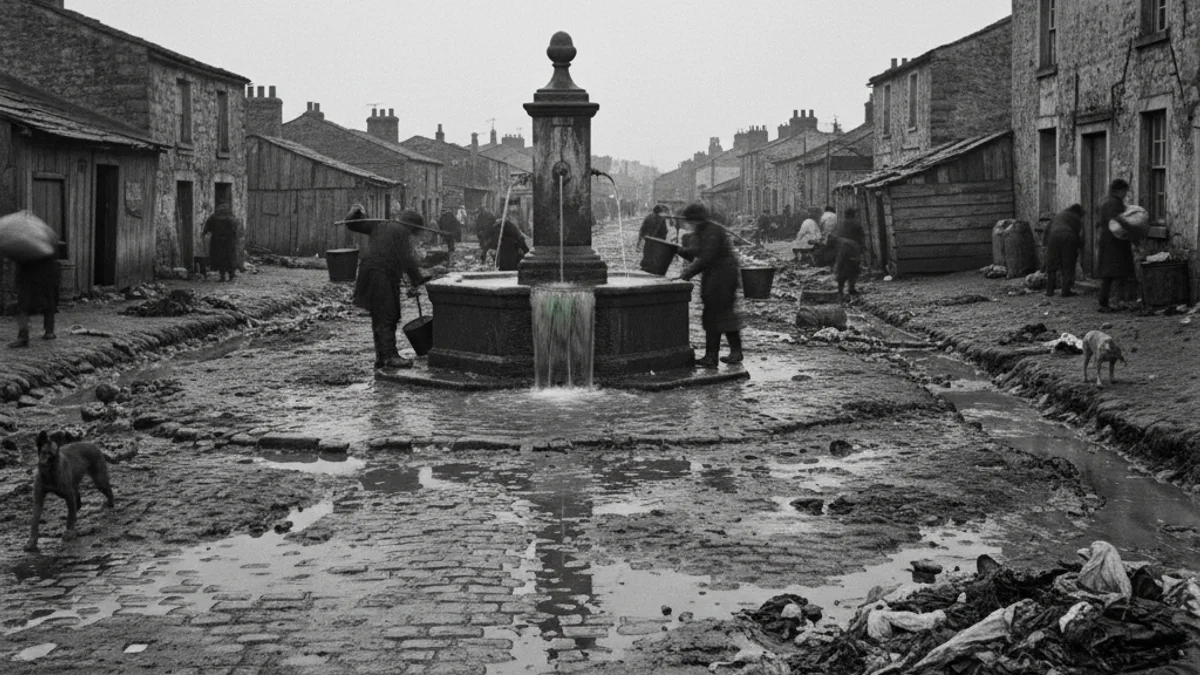
Vallmoll in the 19th century, like many towns in the Camp de Tarragona region, lived under precarious rural sanitary conditions. Poverty, limited personal hygiene, and the lack of an effective sewage system were the perfect breeding ground for diseases such as cholera, typhoid fever, and smallpox.
The press of the time reflected the sanitary alarm. In 1870, smallpox developed alarmingly, leading several inhabitants to seek vaccination in Falset. More serious was the cholera epidemic of 1885, which caused significant mortality. The following year, in 1886, celebrations were held in thanksgiving to the patron saint Saint Sebastian for having been freed from the illness.
In 1887, an episode of alarmism occurred due to measles, with reports speaking of panic and families emigrating. The Civil Governor was asked to dictate measures, but the news was later denied, attributing the origin of the false alarm to the death of only two children the previous week.
The municipality was accused of spending 1500 pesetas to install an organ in the church instead of building a slaughterhouse, a key factor in the insalubrity.
Another focus of attention was diphtheria in 1888. More than 50 cases and five deaths were recorded since June 1887. Public complaints pointed to three sources of insalubrity: the transport of dirty water (latrine) through the central streets, a poorly maintained washhouse belonging to Mr. Ballester, and pools of blood in front of the pig shops due to the lack of a slaughterhouse.
Furthermore, spoiled beef was sold, authorized by the Town Hall secretary without the meat inspector's approval. These conditions had a severe demographic impact, with high infant mortality. The situation slowly improved, culminating in the construction of public washhouses at the entrance of the town in 1908, aiming to eliminate internal sources of contagion.