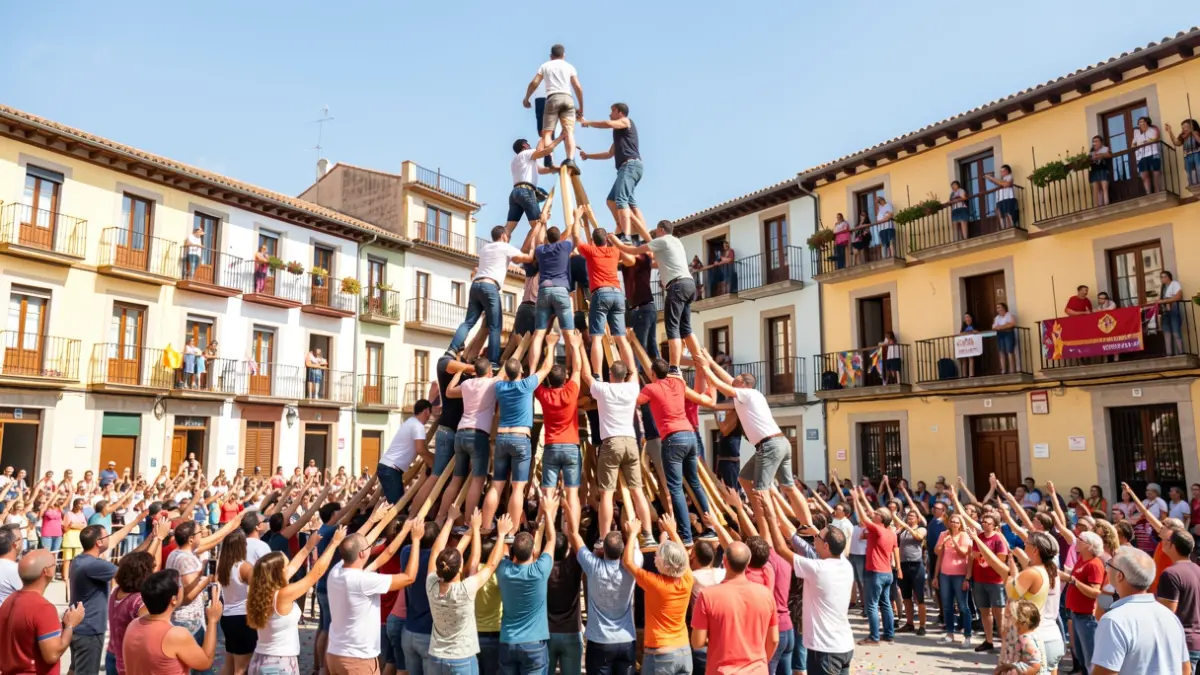
The research, titled Reptes del fet casteller davant del canvi climàtic, promoted by the URV Geography Department and supported by Repsol, confirms a sustained trend of temperature increase. Analysis of meteorological data between 1951 and 2023 shows increases of between 0.3 and 0.4 degrees per decade in key municipalities such as Valls, Tarragona, and Vilafranca del Penedès.
To obtain direct data, the team installed temperature and humidity sensors in several 'casteller' squares during 2024 and 2025. Measurements show that temperatures often exceed 30 degrees Celsius, with higher readings in urban squares due to the urban heat island effect. The 109 'castellers' consulted in participatory workshops set the optimal range between 18 and 25 degrees.
Participants establish 35 degrees Celsius as an extreme threshold to guarantee the safety of the activity.
Based on these results, researchers propose urgent adaptation measures. These include creating shaded areas, ensuring fresh water supply, and adjusting the schedules and duration of the 'diades' to mitigate the risks associated with extreme heat, as well as improvements in medical provisions.