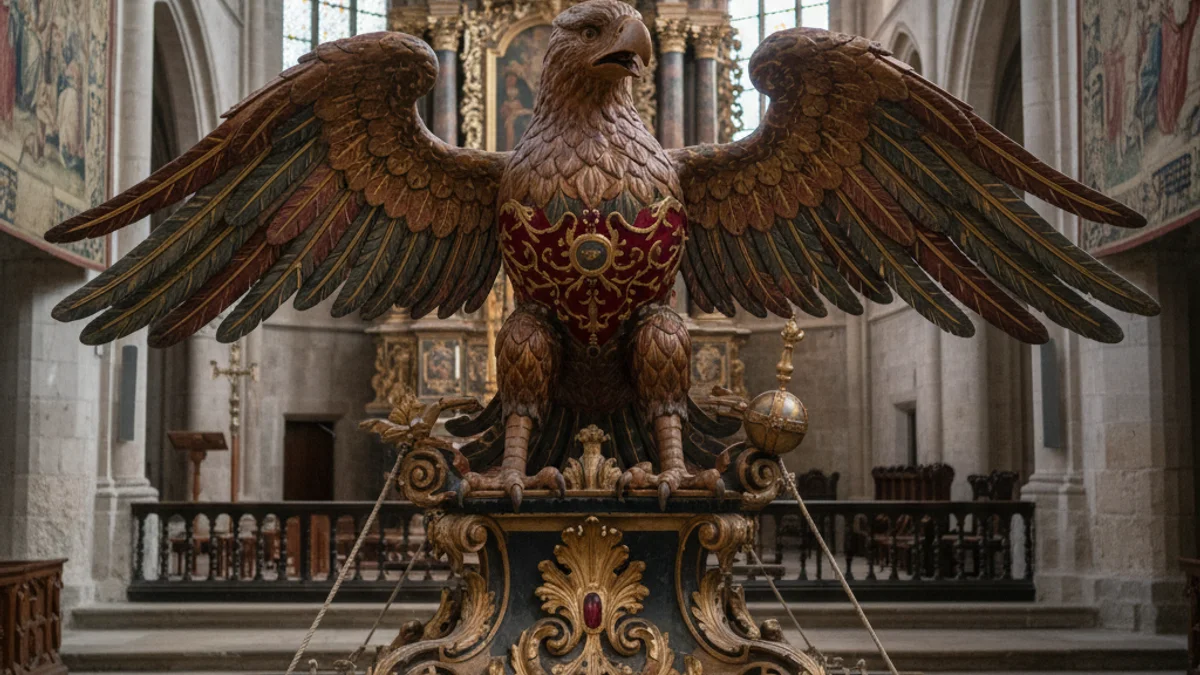
The premiere of the new Àliga de Valls culminates the process initiated to commemorate 325 years since the first documented reference of the figure in the city, dating back to 1700. This piece is one of the most historical and symbolic elements of the Valls festival, playing a central role in the ceremonial procession.
The recovery project, promoted by the City Council and the Ritual and Ceremonial Procession commission, has been faithful to the Baroque-style piece that was destroyed in 1936. Preliminary events include the presentation of the documentary “La nova àliga de Valls” on January 30th and a talk on “The eagles in Catalonia” by historian Daniel Vilarrúbias.
Furthermore, the Biblioteca Popular (Popular Library) hosts the exhibition “325 anys de l'Àliga de Valls” since January 31st, which reviews the history of the interlude and displays the model of the new figure, along with original costumes and pieces. This exhibition serves as a prologue to the solemn premiere.
The central event will be on February 2nd, Day of the Mare de Déu de la Candela (Candlemas), at the Sant Joan church. After the performance of the Moixiganga de Valls and the blessing, the new Àliga will make its solemn entrance and perform its first dance, in an extraordinary tribute to the Virgin.
The new figure, created by the Statuari workshop of the Catalan image maker Carlos Morillo, is a coherent reproduction of the Baroque style of the procession. It measures 2.60 meters high and weighs about 65 kilos. The creation process involved exhaustive research and the use of traditional techniques, featuring an artisanal crown made by the goldsmith Ferran Garreta from Vic.