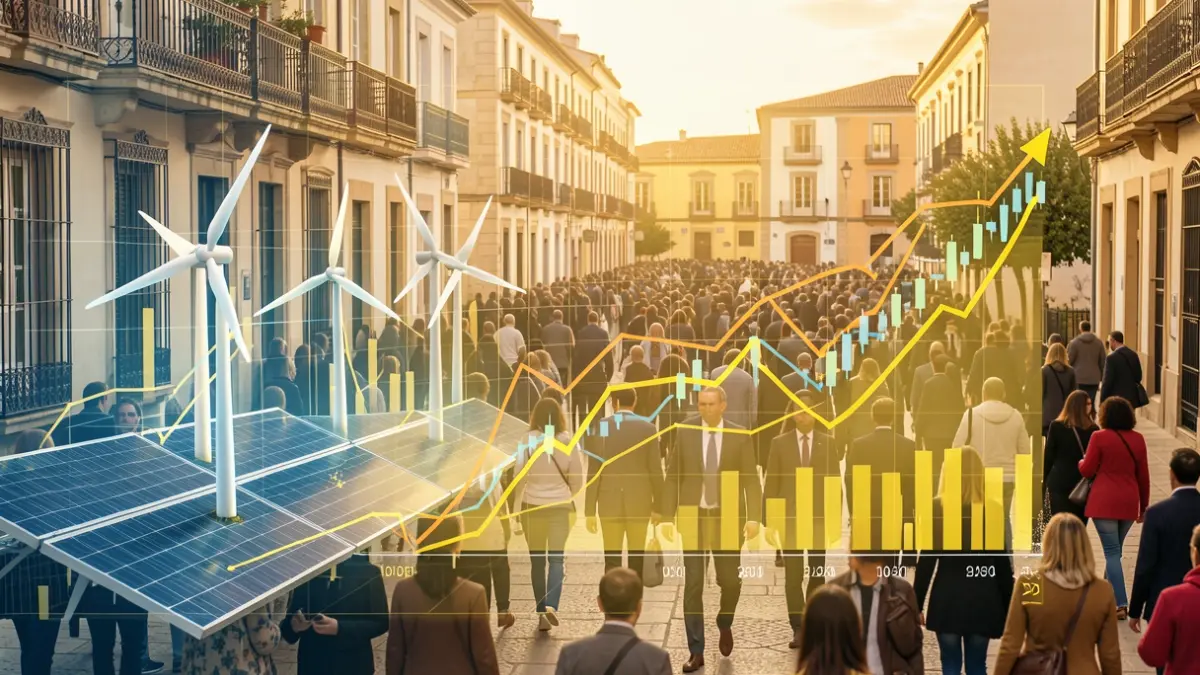
The war in Iran appears to have provided a respite in consumer price trends during May. The preliminary Consumer Price Index (CPI) indicator shows that year-on-year inflation remains at 3.2%, the same rate recorded in April. This stability is primarily attributed to the contribution of renewable energies, which have helped save production costs compared to other sources. Nevertheless, gasoline and diesel prices remain high, albeit with slight decreases compared to the previous month.
According to the National Statistics Institute (INE), the estimated annual inflation for May 2026 is 3.2%. This figure, if confirmed, would mean the annual rate remains stable. The INE highlights the upward influence of transport and recreational, sport, and cultural activities, whose prices are falling less than in May 2025. Conversely, clothing and footwear have seen their prices decrease, unlike last year, and food and non-alcoholic beverages remain stable, whereas they rose in the same month of the previous year. Core inflation, which excludes energy and unprocessed food, increases by one tenth to 2.9%, and the Harmonised Index of Consumer Prices (HICP) stands at 3.6%, also one tenth higher.
These figures confirm a certain inflationary stabilization of the impact of the Iran war on the Spanish economy. Unlike the invasion of Ukraine, the commitment to renewables and fiscal aid has prevented electricity prices from rising significantly. Sources from the Spanish Ministry of Economy indicate that the government's response plan has met its main objective of cushioning the impact of external shocks on inflation and household purchasing power. Energy sovereignty, they affirm, places Spain in a strong position to face the volatility of energy markets.
It should be noted that on June 1st, the reductions in the special tax on electricity and the VAT applicable to electricity and natural gas will end, which could negatively affect prices in June. However, fiscal measures on fuels and sectoral aid to farmers and transporters, as well as reinforced discounts for the social electricity tariff, will remain in effect until June 30th.
The INE has also published the CPIs for other European countries. Spain and Portugal repeat at 3.2% and 3.3% respectively. Germany moderates its inflation to 2.6%, while France rises to 2.4% and Italy to 3.2%. The corresponding harmonised indices (HICP) show differences, with increases ranging from one tenth to four, remaining far from the 2% target set by the European Central Bank (ECB).
This economic context presents a dilemma for the ECB ahead of its meeting on June 11th: whether to combat inflation by raising interest rates or to prioritize economic growth, which shows low rates in the major economies of the euro area. Meanwhile, the Euribor has risen to 2.804%, reaching a twenty-month high and increasing variable mortgage payments for the third consecutive month.